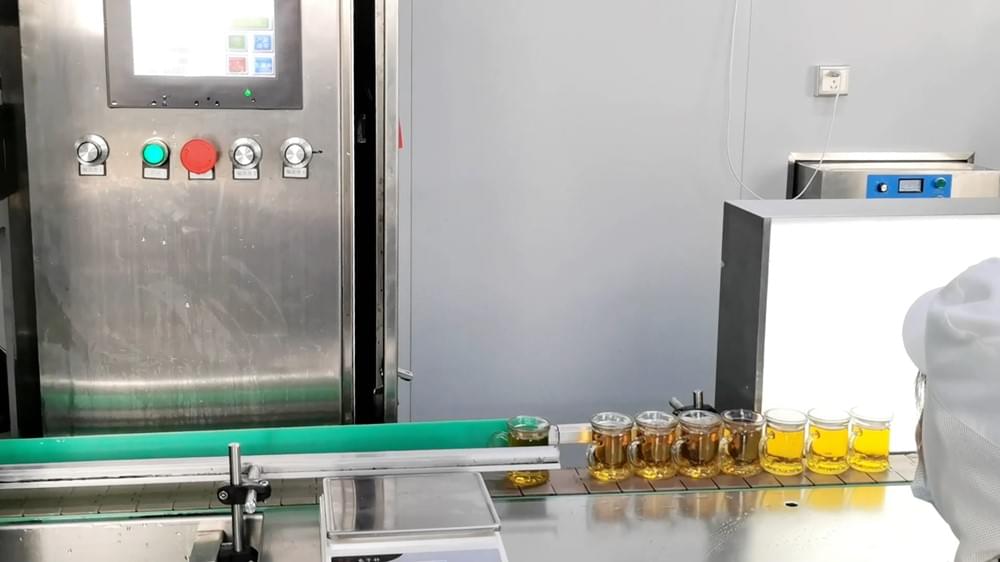
Golden and Corn Syrup Making Machine

introduce

Production of Golden and Corn Syrup

Sugar-based syrups sit at the foundation of modern food manufacturing. From the golden sheen on a baked bun to the smooth mouthfeel of a carbonated soft drink, syrup quality shapes texture, sweetness, shelf life, and visual appeal across bakery, confectionery, biscuit, and beverage production lines. Yet not all syrups are built the same way, and treating them as interchangeable is one of the most common mistakes food producers make when scaling up.

This guide compares two of the most widely used industrial syrups,invert sugar syrup (also called golden syrup) and 75% corn syrup compound syrup,and covering their raw material differences, formulation logic, standardized production workflows, the technical problems that most frequently derail a production run, and the equipment-level fixes that solve them for good.

Explore Products

Why These Two Syrups Get Confused

Both look alike: viscous, glossy, pale-to-amber liquids. But their sources differ.

Invert sugar syrup comes from sucrose, split into glucose and fructose via acid hydrolysis, prized in baking for browning and moisture retention.

Corn syrup comes from corn starch, converted into a glucose-rich syrup (here, a 75% base), favored in beverages for cost and additive compatibility.

Golden and Corn Syrup Formulation

Both syrups follow a straightforward logic: the main ingredient sets the sweetness and texture foundation, while a small set of functional additives fine-tunes stability, safety, and shelf performance. Neither formula relies on exotic or hard-to-source ingredients, which is precisely why both scale well in continuous industrial production.:

Syrup Type Component Amount/Proportion Function
Invert Sugar Syrup

White granulated sugar 50 kg Primary sucrose source; Base material for inversion
Water 15 kg Dissolution medium
Citric acid solution (50%) 500 ml Catalyzes acid hydrolysis of sucrose into glucose and fructose
Sodium carbonate solution (50%) 100 ml Neutralizes residual acidity, brings the syrup to target pH
75% Corn Syrup Compound Syrup
Assemblies
High-glucose/high-fructose corn syrup 75% Primary sweetening and body-building base
Water 23% Dilution and viscosity adjustment
Compound powder blend 1–2% Multi-functional stabilizing and preserving system
  1. Invert sugar syrup is lean and additive-free: just sugar, water, and the two agents that drive and then stop the inversion reaction.
  2. The corn syrup version instead relies on a compound powder blend, xanthan gum for thickening, sodium benzoate for preservation, and citric acid for acidity, turning a plain base into a shelf-stable product.
  3. Either way, the main raw material sets the base, and every added ingredient earns its place, keeping costs predictable and batches easy to standardize.

Operating Procedure

Invert Sugar Syrup Cooking Method

The invert sugar process is fundamentally a chemistry-controlled cook: sucrose is converted into glucose and fructose through a low-temperature, staged heating profile, with no caramelization involved.Taking a 500 kg batch as an example, the production process for invert sugar is described below:

  • Base preheating: Add 114 kg of water to the cooking vessel, heat to 60–70°C, and begin continuous agitation.
  • Sugar dissolution: Slowly add 380 kg of white granulated sugar under constant stirring until fully dissolved, then continue heating to 105°C.
  • Acid-catalyzed inversion: Introduce 3800 ml(3.8L) of 50% citric acid solution, maintain stirring, and raise the temperature to 110–112°C, holding until the hydrolysis reaction reaches completion.
  • Neutralization and pH adjustment: Immediately stop heating once the target temperature is reached, and while still stirring, add 760 ml of 50% sodium carbonate solution to bring the syrup to a final pH of 4.8–6.0.
  • Cooling and storage: Allow the syrup to cool naturally to room temperature (no filtration step is required at this stage) and transfer directly into sealed stainless-steel storage tanks.

75% Corn Syrup Compound Syrup Homogenization Method

Unlike invert sugar, this syrup requires no cooking at all. It is a cold-mix process built around achieving uniform powder dispersion and long-term system stability, with every step designed to protect heat-sensitive additives.Let's continue using the example of 500 kg per batch.

  • Powder pretreatment: Pre-blend xanthan gum with a small quantity of white sugar to prevent clumping when it contacts water.(For the dosage, reserve a portion of the white granulated sugar to pre-mix, based on a total composite powder formulation of 7–8 kg.)
  • Base preparation: In a mixing tank, add 115kg (23%) water, then slowly incorporate 375kg (75%) high-glucose corn syrup under low-speed agitation until the mixture shows no separation or sedimentation.
  • Powder addition: Gradually add the pre-blended powder along with citric acid, sodium benzoate, and other functional additives 5-10 kg, maintaining agitation at 300–500 rpm until the powder is largely dispersed.
  • Homogenization: Increase mixing speed to 600–800 rpm and homogenize for 5–8 minutes to ensure the mixture is fully uniform, with no residual micro-clumps.
  • Filtration: Pass the syrup through an 80–120 mesh stainless-steel bag filter under normal pressure to remove insoluble particles and fine impurities.
  • Final storage: Transfer the filtered syrup into stainless-steel holding tanks and store under gentle, continuous low-speed agitation at ambient temperature to prevent phase separation.
Problem

Challenges Common to Both Syrup Types

  • Equipment corrosion and heavy metal leaching. Lower-grade equipment not built from food-grade stainless steel reacts with acidic syrup over prolonged contact, allowing trace heavy metals such as lead and arsenic to leach into the product, a serious food-safety liability.
  • Contamination during transfer and storage, resulting in microbial overgrowth. Poorly cleaned pipelines and storage tanks, or inadequate sealing, allow total plate counts and yeast/mold levels to exceed safe limits, shortening shelf life and risking product recalls.
  • Product residue during discharge, wasting raw material. High-viscosity syrups, invert sugar in particular, cling to internal surfaces of vessels and pipework. Incomplete discharge means real product loss on every batch, quietly inflating production costs over time.
Solution

Crewin Solution

For manufacturers evaluating or upgrading syrup production lines, the equipment specification matters as much as the formula. Precision PLC temperature control, automated micro-dosing, high-shear homogenization, food-grade stainless-steel construction, CIP cleaning, and zero-residue transfer systems together eliminate the most common causes of batch failure, including under-conversion, pH drift, cloudiness, phase separation, contamination, and raw material waste, while enabling the level of automation and consistency that modern food safety standards demand.

  • Food-grade stainless steel.

    All equipment, piping, and tanks use 304/316 stainless steel, resisting acid corrosion and keeping heavy metals within safety limits.

  • CIP automated cleaning

    A fully automated CIP system delivers high-pressure cleaning and disinfection to every piece of equipment and pipework after each production run, eliminating cleaning blind spots and residue.

  • Zero-residue transfer.

    Sanitary rotor pumps and polished piping move viscous syrup without leftover residue, pushing material utilization above 99%.

  • Centralized Automation

    A PLC control system governs temperature, agitation, and dosing across the line, cutting manual error.

Get in touch

Looking for A Comprehensive Solution of Mixers?

Send us a message if you have any questions or request a quote. Our experts will give you a reply within 24 hours and help you select the right machine you want.

24/7 Support

Our experts will give you a reply within 24 hours

    Your Information How can we help?
    [sy_js_translate_switcher]