A well-planned factory layout can dramatically improve your mixing efficiency, reduce downtime, and ensure smoother production from day one.
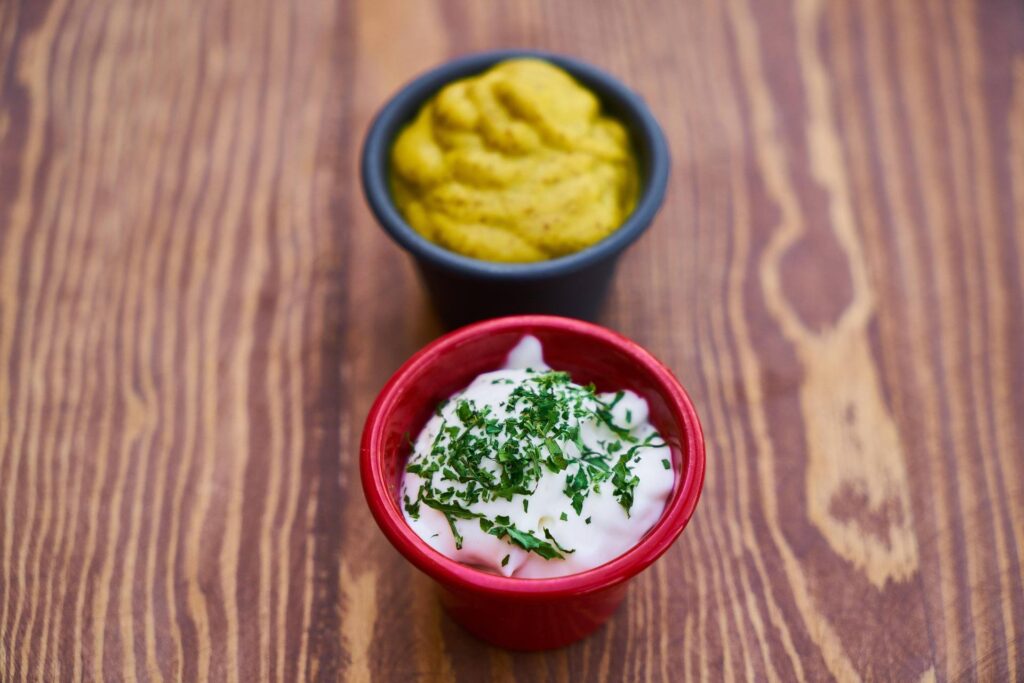
Mayonnaise is one of the most widely used emulsified sauces in the food industry. From sandwiches and burgers to salads and ready-to-eat meals, its smooth texture and rich flavor make it an essential ingredient in many food products.
Although mayonnaise contains relatively simple ingredients, producing it on an industrial scale requires much more than combining oil, eggs, and vinegar. Manufacturers must carefully control ingredient ratios, oil addition, mixing intensity, and emulsification conditions to achieve a stable and consistent product.
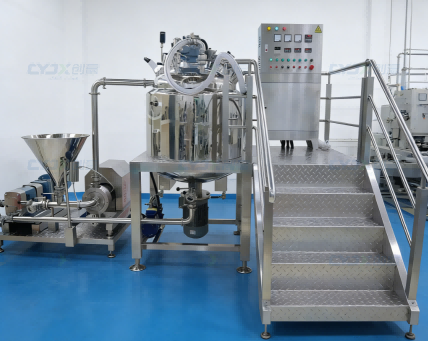
Modern mayonnaise production equipment helps manufacturers manage these variables while processing larger batches. High-shear mixers, vacuum emulsifying machines, and automated filling systems each contribute to different stages of production.
This article explains how mayonnaise is made in factories, the science behind emulsification, the equipment used in industrial production, and the factors that influence final product quality.
1. What Is Mayonnaise?
Mayonnaise is a thick, creamy sauce made by emulsifying vegetable oil into a water-based mixture containing egg yolk, vinegar or lemon juice, and seasonings.
Unlike a simple mixture of oil and water, mayonnaise forms an oil-in-water (O/W) emulsion. Tiny oil droplets remain dispersed throughout a continuous water phase rather than separating into two visible layers.
Egg yolk plays an important role in this process. Its proteins, phospholipids, and other surface-active components help stabilize the oil droplets and prevent them from merging.
Traditional full-fat mayonnaise generally contains a high proportion of vegetable oil, often around 65–80%, although the exact composition depends on the formulation and applicable product standards.
The tightly packed oil droplets give mayonnaise its characteristic thickness, creamy appearance, and smooth mouthfeel.
2.What Are the Main Ingredients in Mayonnaise?
The industrial mayonnaise manufacturing process typically involves ingredient preparation, water-phase mixing, controlled oil addition, emulsification, final adjustment, quality inspection, and packaging.
Although individual factories may use different equipment and processing sequences, the following seven stages describe a common batch production approach.
Ingredient
Function in Mayonnaise
Vegetable oil
Forms the dispersed oil phase and contributes to texture, richness, and viscosity
Egg yolk
Supplies natural emulsifying components that help stabilize oil droplets
Water
Forms the continuous phase of the emulsion
Vinegar or lemon juice
Provides acidity, influences flavor, and contributes to product preservation
Mustard
Adds flavor and may support emulsification
Salt and sugar
Balance flavor and influence the overall formulation
Thickeners and stabilizers
Help adjust viscosity and texture, particularly in reduced-fat formulations
Spices and flavorings
Create the desired taste and product characteristics
Sunflower, soybean, and rapeseed oils are common choices for industrial mayonnaise production. Manufacturers select oils according to flavor, availability, oxidation stability, cost, and product requirements.
The amount of oil also influences the final texture. In full-fat mayonnaise, closely packed oil droplets create a thick structure. When manufacturers reduce the oil content, the product generally becomes less viscous unless other ingredients compensate for the change.
For this reason, reduced-fat mayonnaise and mayonnaise-style dressings often contain starches, gums, or other suitable stabilizing ingredients.
Regardless of the formulation, manufacturers must achieve a balance between flavor, texture, stability, and processing efficiency.
Mauris eleifend ante at augue maximus, eget facilisis nibh sagittis. Donec luctus nunc vitae tortor vulputate, vel posuere neque bibendum. Integer vitae magna ultricies, posuere purus non, pretium elit. Nam iaculis fermentum nunc non varius.
Curabitur viverra tincidunt sapien in dictum. Sed eget libero in lorem egestas ornare. Donec non vestibulum sem, id viverra sem. Pellentesque sit amet gravida enim. Sed in sem risus. Donec vehicula, augue vel egestas imperdiet, nisl justo vestibulum urna, non pulvinar augue nulla ut libero.2. How Is Mayonnaise Made in Factories?
Lorem ipsum dolor sit amet, consectetur adipiscing elit. Sed a magna nec sem laoreet aliquet. Curabitur pretium, metus vitae feugiat cursus, magna lorem rhoncus purus, vitae tincidunt lorem odio in turpis.
Suspendisse potenti. Ut commodo, lorem eget scelerisque suscipit, mauris nisl iaculis felis, ac vestibulum enim libero at sapien. Integer tincidunt tellus vel libero pulvinar, vel luctus lorem imperdiet.
2. How Is Mayonnaise Made in Factories?
The industrial mayonnaise manufacturing process typically involves ingredient preparation, water-phase mixing, controlled oil addition, emulsification, final adjustment, quality inspection, and packaging.
Although individual factories may use different equipment and processing sequences, the following seven stages describe a common batch production approach.
Step 1. Ingredient Preparation
Industrial mayonnaise production begins with selecting, inspecting, and measuring the raw materials.
Manufacturers first prepare vegetable oil, egg yolk, water, vinegar, salt, sugar, mustard, and any additional ingredients required by the recipe.
Accurate weighing is essential because even small variations in the proportions of oil, egg yolk, and water can influence the final product.
For example, increasing the oil content generally produces a thicker emulsion, while changing the egg yolk concentration can affect droplet stabilization and texture.
Food manufacturers commonly use pasteurized egg ingredients to help control microbiological hazards. Depending on the production process, these ingredients may arrive as liquid egg yolk, frozen egg products, or suitable powdered preparations.
Vegetable oil must also meet the required quality specifications before entering the mixing system. These specifications may include flavor, appearance, oxidation condition, and other relevant food-quality parameters.
Where necessary, the oil passes through a filtration system to remove unwanted particles.
Water quality is equally important. Manufacturers generally use potable or appropriately treated water that meets their food production requirements.
Once all ingredients are ready, operators transfer them to the designated mixing equipment according to the production formula.
Step 2. Water Phase Mixing
The next stage involves preparing the water phase, which serves as the continuous phase of the mayonnaise emulsion.
Depending on the formulation, operators combine water with egg yolk, salt, sugar, vinegar, mustard, and other water-compatible ingredients.
The exact order of addition can vary. Some manufacturers introduce acidic ingredients at a later stage to optimize ingredient functionality or meet specific processing requirements.
A mixing tank equipped with an agitator helps distribute the ingredients throughout the liquid.
For formulations containing powdered stabilizers or thickeners, effective powder dispersion becomes especially important.
When operators add powders too quickly or fail to distribute them properly, the outer surfaces of powder particles may hydrate before the inner material contacts the water. This can create lumps that become difficult to eliminate.
Therefore, manufacturers must select suitable mixing speeds, powder addition methods, and hydration conditions.
Some industrial mixing systems use high-shear dispersion equipment or dedicated powder induction arrangements to improve powder incorporation.
However, high shear is not necessary throughout every stage. Certain thickeners require controlled mixing to achieve proper hydration without excessive mechanical damage.
The goal of this step is to prepare a uniform water phase that can receive the vegetable oil during the following emulsification process.
Step 3. Oil Addition and Pre-Emulsification
Once the water phase is ready, the manufacturer begins adding vegetable oil.
Oil addition is one of the most important stages of mayonnaise production because the oil must form droplets within the continuous water phase.
If operators introduce too much oil before the system can disperse and stabilize it, the emulsion may become unstable.
For this reason, many industrial processes use controlled oil dosing.
A metering pump, flow-control system, or other dosing arrangement can regulate the amount of oil entering the mixing vessel.
As the oil enters the water phase, the agitator distributes it throughout the mixture. This produces a coarse emulsion containing relatively large oil droplets.
The purpose of pre-emulsification is not necessarily to achieve the final droplet size immediately. Instead, it creates an initial oil-in-water structure that the high-shear mixing system can refine.
This approach can also improve production efficiency.
Some industrial mixers support faster oil dosing during the initial mixing stage, allowing the mixture to develop a preliminary emulsion before undergoing more intensive homogenization.
However, the appropriate dosing rate depends on the recipe, vessel circulation, mixer capacity, and oil concentration.
Maintaining sufficient movement throughout the vessel is particularly important as viscosity increases.
Poor circulation may create areas where oil accumulates or receives insufficient mixing, resulting in inconsistent product quality.
Step 4. High-Shear Emulsification and Homogenization
High-shear emulsification is the central operation in the industrial mayonnaise manufacturing process.
During this stage, the coarse emulsion passes through a high-shear mixing zone where larger oil droplets break into smaller droplets.
Industrial mayonnaise manufacturers commonly use rotor-stator mixers, high-shear homogenizers, or colloid mills for this purpose.
How Does a High-Shear Mixer Work?
A rotor-stator mixer contains a rapidly rotating rotor positioned close to a stationary stator.
As the rotor spins, it generates intense local fluid motion and mechanical stresses.
The mixture enters the mixing head and passes through narrow passages or stator openings, where turbulent stresses and velocity gradients help break larger oil droplets into smaller ones.
At the same time, egg yolk emulsifying components adsorb onto the newly created oil-water interfaces and help stabilize the droplets.
The resulting droplet size depends on several factors, including:
Rotor speed and mixer geometry
Rotor-stator gap and stator opening design
Oil and water-phase properties
Ingredient concentration
Mixing duration
Temperature and product viscosity
Smaller and more uniformly distributed oil droplets can contribute to a smoother texture and improved emulsion stability.
However, reducing droplet size indefinitely does not guarantee better mayonnaise.
The mixing system must deliver enough energy to achieve the required texture without unnecessarily damaging the product structure.
Why Is Homogenization Important?
Homogenization helps manufacturers achieve a more consistent distribution of oil droplets throughout the mayonnaise.
Without sufficient emulsification, the product may contain larger droplets, uneven texture, or areas that are more susceptible to separation.
Properly controlled homogenization can improve product uniformity and help manufacturers achieve their target viscosity and appearance.
In industrial production, the high-shear unit may operate inside the mixing vessel or as part of an external circulation system.
An internal mixer processes material within the vessel, while an external system pumps the product through a separate mixing head before returning it to the tank.
Both arrangements can be effective when the equipment is correctly designed for the recipe, viscosity, flow requirements, and production capacity.
Step 5. Flavor and Texture Adjustment
After the main emulsification stage, manufacturers evaluate the mayonnaise against the required product specifications.
Depending on the formulation, operators may adjust seasoning, acidity, or consistency.
Additional vinegar, lemon juice, salt, sugar, or flavoring ingredients may be introduced at designated points in the process.
However, these adjustments must be carefully controlled because changes in the composition of the water phase can influence emulsion stability.
Viscosity is another important consideration.
Mayonnaise must have enough structure to remain stable during storage while still being suitable for pumping, filling, and consumer use.
A product that is too thin may not meet customer expectations. Conversely, excessively thick mayonnaise may create difficulties during transfer or packaging.
Manufacturers can adjust texture through formulation and process parameters, including oil concentration, stabilizer selection, mixing intensity, and emulsification time.
At this stage, gentle mixing may be preferable to unnecessary high-shear treatment.
For recipes containing herbs, vegetable particles, or other sensitive inclusions, manufacturers may introduce these ingredients after the main emulsification stage to preserve their intended appearance and structure.
The final objective is a smooth, uniform product with the desired flavor and consistency.
Step 6. Quality Control
Before mayonnaise enters the packaging line, manufacturers must confirm that the product meets the relevant quality and food safety requirements.
Quality control involves more than checking whether the mayonnaise looks creamy.
Industrial producers commonly evaluate several characteristics.
1. pH and acidity
Acidity is important for flavor and microbiological control. The required pH depends on the formulation, applicable regulations, and validated food safety process.
2. Viscosity and texture
Viscosity measurements help manufacturers determine whether the mayonnaise meets its target consistency.
Because mayonnaise is a non-Newtonian material, viscosity measurements should use defined test conditions, including appropriate shear rates and temperatures.
3. Emulsion stability
Manufacturers assess whether the oil droplets remain adequately dispersed and whether the product shows signs of separation.
4. Appearance and flavor
Color, smoothness, taste, and other sensory characteristics are compared with established product specifications.
5. Microbiological quality
Testing and preventive controls help verify that the production process meets food safety requirements.
Some producers also measure oil droplet size distribution, particularly when developing new formulations or evaluating the performance of emulsification equipment.
It is important to distinguish ingredient pasteurization from finished-product heat treatment. Many mayonnaise processes use pasteurized egg ingredients and controlled acidification, while additional thermal processing depends on the specific product and validated manufacturing method.
Once the mayonnaise satisfies the required specifications, it can proceed to filling and packaging.
Step 7. Filling and Packaging
The final stage of mayonnaise manufacturing involves transferring the finished product into suitable containers.
Industrial manufacturers use different packaging formats depending on the target market, product viscosity, and distribution requirements.
Common options include glass jars, plastic bottles, squeeze bottles, sachets, pouches, and larger foodservice containers.
A sanitary transfer system moves the mayonnaise from the processing vessel to the filling machine.
Because mayonnaise is a relatively viscous product, the filling equipment must handle thick sauces without excessive product damage, uncontrolled dripping, or inconsistent filling volumes.
Piston filling machines, servo-controlled filling systems, and other suitable technologies may be used according to the required packaging format and production capacity.
After filling, the containers move through sealing or capping, labeling, coding, and final inspection.
Manufacturers also establish appropriate storage and distribution conditions based on the formulation, packaging, microbiological controls, and validated shelf life.
Some commercially produced mayonnaise products can remain shelf-stable while unopened, but this should never be assumed without a validated product and packaging system.
Together, these production stages transform the original ingredients into a consistent mayonnaise product ready for distribution.
3. How Does Mayonnaise Emulsification Work?
Emulsification determines much of the texture, appearance, and stability of mayonnaise.
Understanding this process helps explain why industrial mixing equipment plays such an important role in manufacturing.
How Does Egg Yolk Stabilize the Emulsion?
Oil and water naturally tend to separate because they have different molecular properties.
To create mayonnaise, manufacturers must disperse the oil into small droplets and prevent those droplets from readily merging.
Egg yolk contains surface-active proteins and phospholipids that help stabilize the oil-water interface.
During mixing, these components move toward the surfaces of newly formed oil droplets.
They help form protective interfacial layers that reduce the tendency of droplets to combine.
This stabilizing effect allows a large amount of oil to remain dispersed within a relatively small continuous water phase.
Egg yolk also contributes to mayonnaise texture through its own structural components.
Consequently, changing the amount or type of egg yolk can influence both droplet size and the final consistency.
How Does High-Shear Mixing Affect Oil Droplet Size?
High-shear mixing applies intense local stresses to the dispersed oil droplets.
When these stresses overcome the forces resisting droplet deformation, larger droplets break into smaller ones.
As emulsification continues, the average droplet size generally decreases until the process approaches conditions determined by the formulation and equipment.
Smaller droplets can increase the total oil-water interfacial area and, under suitable conditions, contribute to a firmer texture.
Droplet size also influences how light interacts with the emulsion, which can affect its appearance.
Traditional mayonnaise commonly contains oil droplets in the micrometer range, although the exact distribution varies by recipe and processing conditions.
The goal is not simply to produce the smallest possible droplets. Manufacturers need a droplet size distribution that supports their desired texture, stability, and sensory properties.
Can Excessive Mixing Damage Mayonnaise?
Yes. Excessive high-shear treatment can negatively affect mayonnaise quality.
During the early stages of emulsification, droplet refinement often improves texture.
However, after the product reaches its desired structure, additional high-shear mixing may provide little benefit.
Under certain conditions, prolonged processing can disrupt egg yolk structures and promote changes in droplet interactions.
This may reduce texture or contribute to emulsion instability.
The optimal mixing time therefore depends on the ingredients, equipment design, shear intensity, and target product characteristics.
Manufacturers should determine suitable processing conditions through product trials and quality measurements rather than assuming that longer mixing always produces better mayonnaise.
4. What Equipment Is Needed for Industrial Mayonnaise Production?
Industrial mayonnaise production requires equipment capable of preparing ingredients, creating a stable emulsion, transferring viscous products, and filling containers accurately.
The exact equipment configuration depends on the production scale, formulation, degree of automation, and packaging requirements.
The following table summarizes common equipment used throughout the process.
Equipment
Main Function
Ingredient preparation and weighing system
Measures raw materials according to the formulation
Stainless steel mixing tank
Combines liquid ingredients and prepares the water phase
High-shear mixer
Disperses ingredients and reduces oil droplet size
Vacuum emulsifying homogenizer
Combines agitation, high-shear emulsification, and controlled vacuum processing
Sanitary transfer pump
Transfers viscous mayonnaise between processing and packaging equipment
Filling and packaging machine
Fills, seals, and prepares finished products for distribution
CIP cleaning system
Supports repeatable cleaning of compatible production equipment
Why Do Some Manufacturers Use Vacuum Emulsifying Mixers?
Air can enter mayonnaise during powder addition, agitation, or product transfer.
Excessive air incorporation may affect product appearance, density, and filling consistency.
A vacuum emulsifying mixer helps control air incorporation by operating under reduced pressure during suitable processing stages.
Depending on its configuration, the equipment may combine a high-shear homogenizer with a slow-speed agitator and wall-scraping system.
The high-shear unit creates the emulsion, while the agitator helps circulate the increasingly viscous material throughout the vessel.
Scrapers can reduce material accumulation on vessel walls and support more uniform mixing.
These functions are particularly useful when manufacturers process thick mayonnaise formulations or require consistent results across repeated batches.
However, a vacuum system is not mandatory for every mayonnaise production process. Equipment selection should reflect the formulation and actual processing requirements.
Batch Production vs. Continuous Production
Industrial mayonnaise can be manufactured using batch or continuous processing systems.
In batch production, manufacturers process a defined quantity of ingredients in a mixing vessel before discharging the finished product.
This approach offers flexibility when producing different recipes, developing new products, or operating at moderate production volumes.
In continuous production, ingredients enter a controlled processing system while finished mayonnaise exits at a corresponding rate.
Continuous systems can be suitable for large-scale manufacturing with stable formulations and sustained production demand.
Both methods require appropriate control of ingredient dosing, mixing intensity, residence time, and product quality.
For manufacturers evaluating a new production line, the decision should consider expected output, recipe flexibility, cleaning requirements, automation, and available production space.
For more information about industrial mixing configurations, explore CreWin's Mayonnaise Processing Mixer solutions.
5. How to Maintain Consistent Mayonnaise Quality
Producing a successful mayonnaise batch is only the beginning.
Industrial manufacturers must reproduce the same texture, appearance, flavor, and stability across multiple batches and production shifts.
Consistency depends on both formulation control and the performance of the mixing process.
Control Ingredient Ratios and Oil Addition
The ratio between oil, egg yolk, and the water phase has a direct influence on emulsion formation.
A higher oil concentration generally increases droplet packing and can create a thicker product.
Meanwhile, the amount and functionality of egg yolk influence how effectively the oil droplets become stabilized.
Manufacturers should maintain accurate ingredient dosing and avoid unnecessary variations between batches.
Oil addition also requires attention.
Adding oil faster than the system can disperse and stabilize it may create localized oil accumulation or an unstable emulsion.
Therefore, manufacturers should establish an oil dosing procedure that matches the mixing system and formulation.
Control Mixing Time, Shear Intensity, and Temperature
Mixing conditions affect both the rate of emulsification and the final product structure.
Insufficient shear may leave the mayonnaise with larger oil droplets or inconsistent texture.
Excessive shear, on the other hand, may reduce texture under certain conditions.
Temperature also influences ingredient viscosity and emulsification behavior.
For example, the properties of vegetable oil and the water phase change with temperature, which can affect droplet breakup and the final texture.
Manufacturers should therefore establish repeatable operating conditions for each formulation.
Important process parameters may include mixing speed, emulsification time, oil addition rate, batch temperature, and the operating settings of the homogenizer.
When increasing production capacity, manufacturers should not assume that simply extending mixing time will reproduce the results obtained in a smaller vessel.
The circulation pattern and energy distribution within the equipment also matter.
Prevent Oil Separation and Excessive Air Incorporation
Oil separation is one of the most recognizable signs of mayonnaise emulsion instability.
It can result from several factors, including inadequate emulsification, unsuitable ingredient proportions, poor oil addition control, or changes in the emulsion structure.
To reduce separation risks, manufacturers should verify the formulation, maintain proper mixing conditions, and monitor product quality throughout production.
Air incorporation presents another challenge.
When excessive air becomes trapped in the product, the mayonnaise may develop visible bubbles or inconsistent density.
A properly designed mixing system can reduce unnecessary air intake through controlled agitation, appropriate ingredient addition, and suitable vessel circulation.
Vacuum processing can provide additional assistance when the product and equipment are compatible with this approach.
Cleaning and hygiene also contribute to consistent manufacturing.
Product residues, poorly maintained equipment, or inconsistent cleaning procedures can affect subsequent batches and introduce food safety risks.
For this reason, manufacturers should establish validated cleaning procedures and maintain sanitary processing equipment.
Ultimately, reliable mayonnaise production depends on treating the formulation, mixing equipment, and operating procedure as one integrated process.
6. Conclusion
Industrial mayonnaise production combines relatively simple ingredients with carefully controlled emulsification technology.
From preparing the water phase and introducing vegetable oil to high-shear homogenization, quality inspection, and packaging, every stage contributes to the characteristics of the finished product.
Among these operations, emulsification is especially important because it determines how oil droplets disperse and interact within the continuous water phase.
Manufacturers must also manage ingredient ratios, mixing intensity, temperature, and air incorporation to maintain consistent texture and stability.
Choosing suitable production equipment helps manufacturers achieve these objectives while meeting their requirements for batch size, product flexibility, and processing efficiency.
If you are planning a mayonnaise manufacturing project or upgrading an existing mixing system, explore CreWin's industrial mayonnaise mixing solutions to learn more about equipment configurations for emulsified sauce production.

 ZS Lab Vacuum Emulsifying Mixer
 ZEx Ex-Proof Vacuum Homogenizer Mixer without Hydraulics
 ZA Lab Vacuum Homogenizer
 ZB Vacuum Homogenizer Emulsifier without Hydaulics
 ZB Simplified Vacuum Homogenizer Mixer
 ZA Vacuum Homogenizer Mixer without Hydraulics
 ZS Vacuum Emulsifying Mixer
 ZB Vacuum Homogenizer Emulsifier