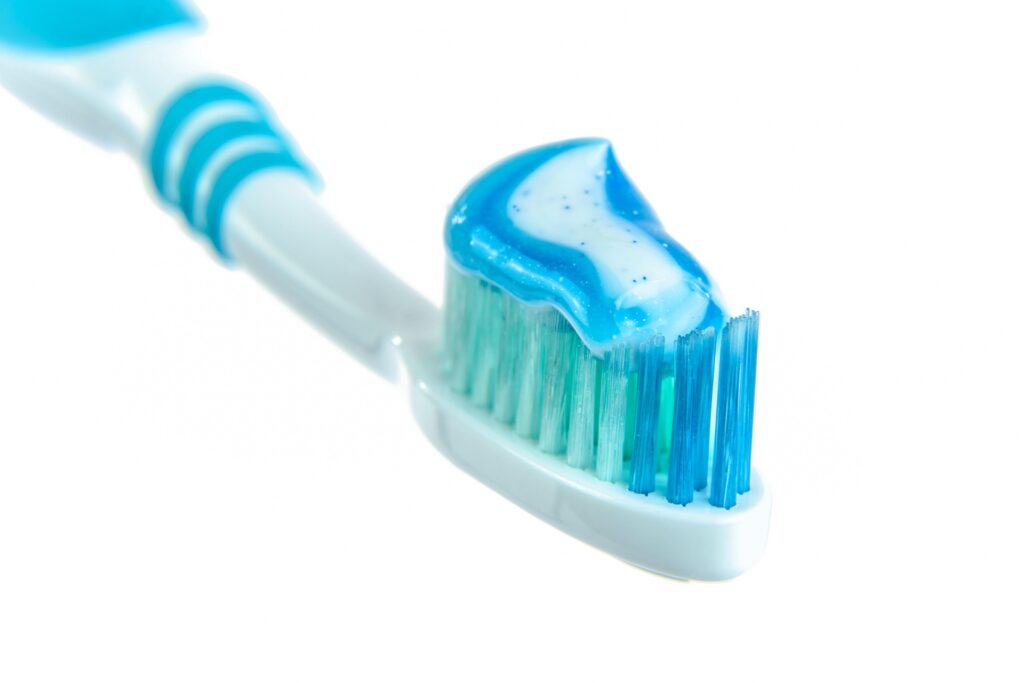
Discover how toothpaste is made in factories, from mixing and vacuum deaeration to filling, quality control, and industrial production equipment
Toothpaste is one of the most familiar personal care products in the world. Millions of people use it every morning and evening, yet few consider the manufacturing process behind each tube. Producing toothpaste on an industrial scale involves far more than combining a few ingredients in a mixing tank.
Manufacturers must carefully manage powder dispersion, thickener hydration, viscosity, air removal, and filling accuracy to create a smooth, stable product. Even a small change in the mixing sequence or processing conditions can affect the final toothpaste's appearance, texture, and performance.
So, how is toothpaste made in factories? This guide explores the history of toothpaste, its essential ingredients, the complete toothpaste manufacturing process, common production challenges, industrial mixing solutions, and the equipment used to produce consistent toothpaste at scale.
Praesent in diam id risus malesuada cursus. Curabitur sit amet risus eu velit gravida consequat. Morbi efficitur vel lectus at sagittis. In hac habitasse platea dictumst.
Key Takeaways
Toothpaste has evolved significantly. Early tooth-cleaning powders eventually gave way to modern paste and gel formulations manufactured with specialized equipment.
Industrial toothpaste manufacturing involves several stages, including ingredient preparation, liquid-base mixing, powder dispersion, homogenization, deaeration, quality inspection, and tube filling.
Three common production challenges are powder agglomeration, air entrapment, and uneven mixing of high-viscosity materials.
High-shear dispersion, vacuum processing, and low-speed agitation perform different functions and should be selected according to the formulation and manufacturing stage.
Consistent toothpaste quality depends on more than the recipe. Process control, suitable equipment, ingredient compatibility, and effective quality testing all contribute to reliable production.
1. History of Toothpaste
Toothpaste has a long history that stretches back thousands of years. However, the products used by ancient civilizations were considerably different from the smooth, flavored pastes available today.
Understanding this evolution helps explain how toothpaste developed from simple cleaning preparations into a sophisticated industrial product.
Ancient Tooth-Cleaning Methods
Long before modern toothpaste existed, people used various substances to clean their teeth.
Historical accounts describe preparations containing crushed minerals, salt, pumice, and other abrasive materials. Some early civilizations also experimented with ground bones and ashes. These substances were intended to remove deposits from tooth surfaces, although many were uncomfortable to use and some could damage teeth.
Unlike modern toothpaste, early cleaning preparations did not benefit from standardized formulations, controlled particle sizes, or systematic product testing.
Their effectiveness and safety varied considerably.
Over time, people began combining cleaning powders with liquids and aromatic substances to make them easier and more pleasant to use. These developments gradually established the foundation for modern dentifrices.
The Birth of Modern Toothpaste
Modern toothpaste began taking shape during the nineteenth century, when commercial manufacturers introduced increasingly refined tooth-cleaning products.
American dentist Washington Wentworth Sheffield is closely associated with the early development and commercialization of cream-style toothpaste. His products helped popularize a more convenient alternative to traditional tooth powders.
Packaging also changed during this period.
Early toothpaste was commonly sold in jars. Later, collapsible tubes provided a more convenient and hygienic way to dispense the product. Several companies have claimed important roles in introducing toothpaste tubes, so the history of the first commercial tube is not entirely undisputed.
Nevertheless, tube packaging transformed the toothpaste market.
It allowed consumers to dispense a controlled amount without repeatedly exposing the remaining product to their fingers or toothbrushes.
The Evolution of Modern Toothpaste
During the twentieth century, toothpaste manufacturers introduced increasingly specialized formulations.
Fluoride-containing products became important in cavity prevention, while gel toothpaste expanded the range of available textures and appearances. Manufacturers also developed formulations intended for tartar control, tooth sensitivity, whitening, and other oral care needs.
Meanwhile, decorative products such as striped toothpaste created additional manufacturing and packaging requirements.
Today, toothpaste may be produced as an opaque white paste, a transparent or translucent gel, a multicolored product, or a specialized formulation containing suspended particles.
These variations explain why modern toothpaste factories require more than a basic agitator. Different formulations may need distinct powder-handling methods, mixing conditions, vacuum systems, and filling technologies.
2. What Is Toothpaste Made Of?
Modern toothpaste generally combines liquid ingredients, finely divided solids, functional additives, and ingredients that control its consistency.
Although formulations vary by product type and market, most conventional toothpastes contain several major ingredient categories.
Abrasives help remove surface deposits and stains during brushing. Hydrated silica and calcium carbonate are common examples. Their particle characteristics, concentration, and compatibility with other ingredients influence both cleaning performance and processing requirements.
Humectants, including glycerin and sorbitol, help retain moisture and prevent the toothpaste from drying out. They also contribute to its texture and mouthfeel. Together with water, these ingredients often form the initial liquid base.
Binders and thickeners provide the structure needed to keep solid particles suspended and maintain a consistent paste. Cellulose derivatives, such as carboxymethyl cellulose (CMC), and certain gums are used in suitable formulations.
Surfactants support cleaning and foaming. Sodium lauryl sulfate (SLS) is one example, although alternative surfactants are used in products designed for different consumer preferences.
Active ingredients depend on the toothpaste's intended function. Fluoride compounds are used in many anticavity products, while other formulations may contain ingredients intended for sensitivity relief or additional oral care benefits.
Finally, flavorings and sweeteners improve the brushing experience, while colors, preservatives, and other functional additives may be included where appropriate.
Each ingredient contributes to the finished product, but its role during manufacturing is equally important.
For example, an abrasive must be distributed evenly, a thickener must hydrate correctly, and a surfactant must be incorporated without generating excessive foam.
Consequently, the order of addition and the mixing conditions can be just as important as the ingredients themselves.
3. How Is Toothpaste Made in Factories?
The industrial toothpaste manufacturing process transforms measured raw materials into a uniform, stable paste that can be transferred, filled, and packaged efficiently.
A typical production line includes seven major stages. However, the exact sequence varies with the formulation, equipment design, and whether the factory produces an opaque paste, a clear gel, or a specialty product.
Some operations, particularly vacuum processing and quality checks, may occur throughout multiple stages rather than at one fixed point.
Step 1. Raw Material Preparation
Toothpaste manufacturing begins before any ingredients enter the mixing vessel.
First, operators or automated dosing systems identify the materials required for a specific production batch. Each ingredient is checked against the approved formulation and weighed according to the batch record.
Raw materials may arrive in bags, drums, intermediate containers, or bulk storage systems.
Powders require particular attention because their handling characteristics differ considerably. Some flow freely, while others absorb moisture, generate dust, or form lumps during storage.
Before production, manufacturers may inspect:
Ingredient identity and batch information.
Packaging integrity and storage conditions.
Relevant quality documentation.
Powder condition, including visible agglomeration.
Weighing accuracy and material traceability.
The factory must also prepare the production equipment.
Mixing vessels, transfer lines, valves, and filling-contact surfaces should be cleaned and verified according to the applicable sanitation procedures. Operators then confirm that the correct equipment configuration and production settings are available.
This preparation reduces the likelihood of incorrect dosing, contamination, and unnecessary interruptions once mixing begins.
For factories producing several toothpaste formulations, proper material identification and line clearance are especially important.
Step 2. Preparing the Liquid Base
The next stage involves preparing the liquid portion of the toothpaste.
Water, glycerin, sorbitol solution, and other suitable liquid ingredients are introduced into a stainless steel mixing vessel according to the formulation.
An agitator circulates the liquids until the mixture becomes sufficiently uniform for subsequent processing.
This stage may appear simple, but the liquid base strongly influences how powders behave when they are added later.
For example, the proportion of water and humectants affects the wetting and hydration of thickening agents. A poorly prepared base may make powder incorporation more difficult, even when powerful mixing equipment is available.
Some formulations require controlled heating or cooling to support ingredient dissolution or processing. Others can be prepared at approximately ambient temperature.
Therefore, manufacturers should not assume that every toothpaste formulation requires the same temperature.
During liquid-base preparation, operators typically monitor mixing speed, temperature, batch quantity, and ingredient addition.
The objective is to establish a uniform processing medium before introducing materials that will significantly increase viscosity.
Step 3. Thickener Hydration and Powder Dispersion
This is one of the most technically demanding stages of toothpaste production.
Thickening agents help create the structure that allows toothpaste to remain stable inside a tube while still being easy to squeeze onto a toothbrush.
However, many thickeners are difficult to incorporate directly into liquid.
When dry powder contacts a liquid, the outer surface of a particle cluster may hydrate rapidly and form a sticky layer. This layer can prevent liquid from reaching the powder trapped inside.
The result is a partially hydrated lump, sometimes described as a fish-eye.
Such lumps may survive ordinary stirring and create visible defects or inconsistent viscosity.
To minimize these problems, manufacturers carefully control powder addition and mixing conditions.
Depending on the formulation, the thickener may be introduced gradually, dispersed in a compatible liquid before addition, or incorporated using a suitable powder-induction or high-shear mixing system.
The goal is to expose as much powder surface as possible to the liquid while preventing large agglomerates from forming.
Once properly dispersed, the thickener requires sufficient time and appropriate conditions to develop its intended viscosity.
Importantly, dispersion and hydration are related but different processes.
Dispersion separates and distributes particles throughout the liquid. Hydration involves the interaction of those particles or polymer chains with the surrounding liquid, allowing the thickener to develop its functional properties.
A mixture may look uniform before its viscosity has fully developed.
For this reason, manufacturers must consider both mixing intensity and hydration time.
Step 4. Adding Abrasives and Homogenization
After the liquid base and structural ingredients have been prepared, the process incorporates abrasive materials according to the approved manufacturing sequence.
Common abrasives include hydrated silica and calcium carbonate.
These materials are generally present as finely divided solids rather than ingredients that dissolve completely in the liquid base.
Their uniform distribution is essential for consistent product texture and cleaning performance.
However, incorporating abrasives creates several processing challenges.
Low-density powders, including some grades of hydrated silica, may float on the liquid surface and resist wetting. Other abrasive materials can form agglomerates or require additional dispersion when supplied as slurries.
As more solids enter the mixture, viscosity often increases.
The mixing system must therefore provide enough material movement to distribute the particles without creating excessive aeration, heat, or equipment wear.
Suitable high-shear equipment may be used during selected stages to break down agglomerates and improve dispersion.
Meanwhile, slower bulk agitation helps move material through the vessel and reduces the risk of poorly mixed regions.
The combination of these actions can be particularly useful when processing viscous toothpaste.
Nevertheless, continuous high-speed rotor-stator operation is not appropriate for every formulation.
Highly abrasive and high-viscosity white toothpaste may require a different balance of mixing technologies than a transparent gel.
Manufacturers must match the mixing method to the product's rheology, solids content, and processing objectives.
Step 5. Adding Surfactants and Flavoring Ingredients
Once the main paste structure has developed, manufacturers introduce the remaining functional ingredients according to the formulation.
These may include surfactants, flavorings, sweeteners, colors, and selected active ingredients.
The addition sequence is important because some ingredients are sensitive to excessive mixing, temperature, or prolonged processing.
Surfactants deserve particular attention.
Their ability to generate foam is useful during brushing, but unwanted foam inside the manufacturing vessel can complicate production.
If a foaming surfactant is introduced too early and exposed to intensive agitation, the mixture may trap substantial amounts of air.
Therefore, some toothpaste processes add surfactants later and use gentler mixing conditions.
Flavorings may also be added during a later stage to limit unnecessary exposure to processing conditions that could affect their characteristics.
Active ingredients require additional control.
For example, fluoride-containing formulations must account for the compatibility of the fluoride source with the other ingredients, as well as the relevant product specifications.
Manufacturers should not treat the addition of all active ingredients as interchangeable.
At this stage, the objective is to distribute the remaining ingredients evenly without compromising the paste structure developed during earlier mixing.
Step 6. Vacuum Deaeration and Quality Inspection
Managing entrapped air throughout production helps manufacturers maintain a smooth toothpaste texture and consistent product quality.
Air can enter the mixture during powder addition, liquid circulation, and mechanical agitation. Certain powders already contain air between their particles, while surfactants can increase the tendency to form foam.
If this air remains in the finished toothpaste, it may create visible bubbles, inconsistent apparent density, and difficulties during filling.
Vacuum processing helps reduce these problems.
Inside a suitably designed closed mixing vessel, the vacuum system lowers the surrounding pressure. Under appropriate conditions, entrained gas bubbles expand and can be removed more readily from the paste.
Vacuum may be applied during selected mixing stages or during a dedicated deaeration period.
The effectiveness of the process depends on several factors, including paste viscosity, mixing conditions, exposed surface area, vacuum level, and processing time.
For highly viscous toothpaste, removing small bubbles can be particularly challenging because the material resists their movement.
A suitable vacuum mixing system therefore combines air removal with controlled material circulation.
After processing, operators collect representative samples for in-process quality checks.
Depending on the product, these may include viscosity, texture, appearance, homogeneity, pH, and relevant active ingredient measurements.
If the batch does not meet the approved specifications, it must be evaluated under the factory's quality procedures before release.
Step 7. Tube Filling, Sealing, and Packaging
After the toothpaste passes the required checks, it moves to the filling and packaging stage.
Because toothpaste is relatively viscous, manufacturers generally use a transfer system suited to the product's flow properties.
A sanitary positive-displacement pump may be appropriate for transferring certain formulations from the mixing vessel to a filling machine.
The transfer system should minimize unnecessary air incorporation and avoid damaging the product's structure.
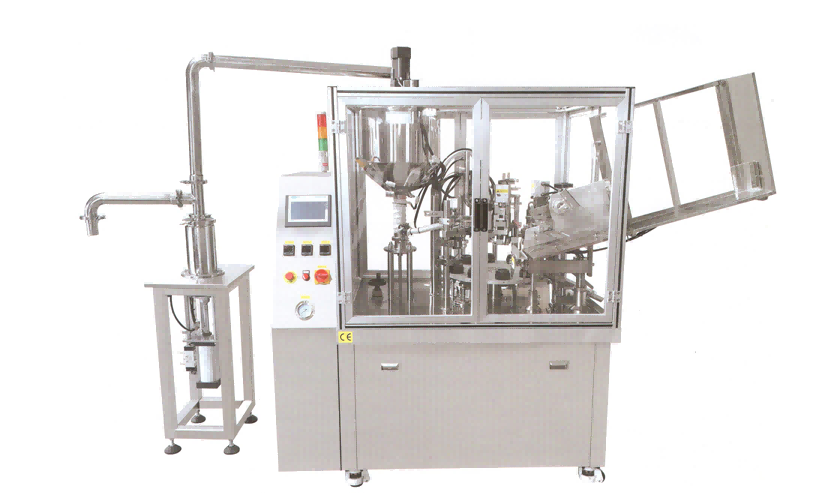
At the filling station, empty tubes are positioned and prepared for filling.
For many conventional toothpaste tubes, the dispensing opening is already formed and capped, while the opposite end remains open.
The filling machine dispenses a controlled amount of toothpaste through this open end.
The tube is then sealed using a method appropriate for its packaging material. Depending on the tube construction, this may involve heat sealing, ultrasonic sealing, or mechanical crimping.
After sealing, the production line may perform additional operations:
Checking fill weight or quantity.
Inspecting the tube seal and appearance.
Applying or verifying batch identification.
Printing or checking required production information.
Placing individual tubes into retail cartons.
Packing cartons into larger shipping cases.
Automated conveyors connect these operations in higher-output production lines.
Manufacturers may also incorporate inspection and rejection systems to remove tubes that do not meet filling or packaging requirements.
Once the packaged products pass the applicable release procedures, they are ready for storage and distribution.
4. Common Challenges in Toothpaste Manufacturing
Although the overall toothpaste production process is well established, producing a uniform paste at industrial scale can be difficult.
Three challenges are particularly important: powder agglomeration, air entrapment, and uneven mixing caused by high viscosity.
4.1 Powder Agglomeration and Incomplete Hydration
Powder incorporation is not simply a matter of adding dry ingredients to a liquid.
When certain thickeners come into contact with water, their surfaces can hydrate rapidly. If the surrounding liquid cannot penetrate the resulting agglomerates, dry powder remains trapped inside.
These lumps may become difficult to eliminate through conventional agitation alone.
Low-density materials can create another problem. Instead of entering the liquid, they may accumulate on the surface or attach to the vessel wall.
As a result, manufacturers may encounter uneven thickener distribution, inconsistent viscosity, visible particles, or extended mixing times.
Rapid powder addition, combined with poor material movement inside the mixing vessel, can further increase the likelihood of lump formation.
Incomplete hydration also creates uncertainty during quality control.
Even after agitation has stopped, the paste may gradually develop a higher viscosity as the thickening agents continue to hydrate. If the manufacturer evaluates viscosity before the formulation has reached the required condition, the result may not represent the final product.
4.2 Air Entrapment and Foaming
Air can enter toothpaste at several points during manufacturing.
Powders carry air into the vessel, surface agitation can draw additional air into the liquid, and foaming ingredients may stabilize the bubbles that form.
The resulting aeration is more than an appearance problem.
Entrained air can affect apparent density, interfere with consistent filling, and produce unwanted voids or irregularities in the finished product.
Excessive foam may also occupy valuable vessel space and complicate process control.
Furthermore, high-viscosity toothpaste does not release bubbles as readily as a low-viscosity liquid.
Once trapped, small bubbles may remain suspended for a considerable period.
Manufacturers must therefore control both the amount of air introduced and the effectiveness of subsequent deaeration.
4.3 High Viscosity and Uneven Mixing
Toothpaste must be thick enough to retain its shape but sufficiently workable to be transferred and dispensed.
This combination creates challenges for industrial mixing equipment.
As viscosity increases, the material may no longer circulate freely through the vessel.
A fast-moving mixing element can generate intense local movement without necessarily producing effective circulation throughout the entire batch.
Consequently, some regions may receive more processing than others.
Poor bulk movement can also leave material on the vessel walls or create stagnant areas where ingredients are not fully incorporated.
Abrasive solids introduce an additional consideration: equipment surfaces, seals, and mixing components must tolerate the intended operating conditions.
These factors make agitator geometry, material circulation, equipment compatibility, and processing sequence essential parts of toothpaste manufacturing.
5. The Solution
The three challenges described above cannot always be solved by increasing mixer speed.
Instead, manufacturers should select mixing technologies according to the physical behavior of the toothpaste and the requirements of each processing stage.
High-shear dispersion, vacuum deaeration, and low-speed agitation serve different but complementary purposes.
5.1 High-Shear Mixing and Powder Dispersion
High-shear mixing can help manufacturers overcome difficult powder-wetting and dispersion problems.
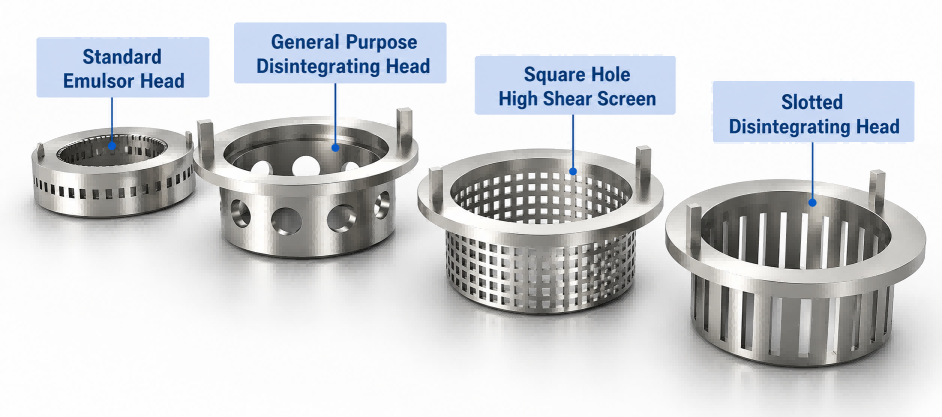
A common high-shear system uses a rotor-stator mixing head.
The rotor rotates at high speed inside a stationary stator, drawing material into the mixing zone. The material experiences strong velocity gradients and mechanical action as it moves through the narrow working region and exits the stator openings.
This action can help separate agglomerated particles and distribute suitable powders more efficiently throughout the liquid.
In toothpaste production, high-shear mixing may be particularly useful when preparing the liquid base, incorporating selected thickeners, or dispersing ingredients before the mixture becomes excessively viscous.
For some formulations, an inline high-shear mixer can also support a controlled recirculation process.
However, effective dispersion does not mean every ingredient should receive maximum shear.
Some toothpaste formulations contain high concentrations of abrasive solids, while others develop rheological structures that may be affected by excessive processing.
Continuous high-speed rotor-stator mixing can therefore be unsuitable during certain stages.
The practical objective is to apply enough shear to achieve the required dispersion while avoiding unnecessary energy input, heat generation, aeration, or equipment wear.
5.2 Vacuum Mixing and Deaeration
Vacuum mixing addresses the second major challenge: trapped air.
A vacuum-capable toothpaste mixer operates inside a sealed vessel connected to a suitable vacuum system.
By reducing the pressure above the product, the system can promote the removal of entrained gases under controlled conditions.
This is particularly useful when the formulation contains powders that introduce air or when earlier mixing stages have generated bubbles.
However, vacuum performance depends on the entire mixing process.
For example, if an agitator continuously pulls air into the product, vacuum treatment may be less efficient than a process designed to limit air incorporation from the beginning.
Similarly, high-viscosity toothpaste requires adequate material movement so that trapped bubbles can reach regions where removal is possible.
Manufacturers should therefore combine vacuum treatment with suitable agitator operation, ingredient addition procedures, and process timing.
A vacuum system is not a substitute for good mixing practice. It is one part of an integrated air-control strategy.
5.3 Low-Speed Agitation and High-Viscosity Mixing
Once toothpaste becomes highly viscous, bulk material movement becomes especially important.
Low-speed agitators designed for viscous products can help move material throughout the vessel without relying exclusively on localized high-shear action.
Depending on the equipment configuration, the mixing system may include anchor-style agitators, suitable blades, or wall-scraping components.
An anchor agitator can promote movement near the vessel wall, while scrapers help reduce material accumulation on surfaces where the product might otherwise remain relatively stagnant.
The appropriate configuration depends on the toothpaste's viscosity, flow behavior, batch volume, and vessel geometry.
For certain products, a combination of low-speed bulk agitation and localized high-shear processing provides a more balanced approach than either technology alone.
Process parameters must also be controlled.
Mixing time should be sufficient to achieve uniformity, but unnecessary processing can increase energy consumption or affect sensitive ingredients.
Temperature control may help maintain consistent processing conditions where required by the formulation.
Likewise, the sequence of ingredient addition should support effective dispersion before the mixture reaches its highest viscosity.
Together, these measures help manufacturers achieve a more uniform toothpaste while maintaining practical production efficiency.
6. What Equipment Is Used in Toothpaste Manufacturing?
A complete toothpaste production line may contain several types of equipment, each responsible for a particular manufacturing operation.
The exact configuration depends on the formulation, required production capacity, level of automation, and packaging format.
Equipment
Picture
Main Function
Raw Material Weighing System
Measures liquid and powdered ingredients according to the batch formula
Premixing Tank
Prepares liquid bases or selected ingredient mixtures
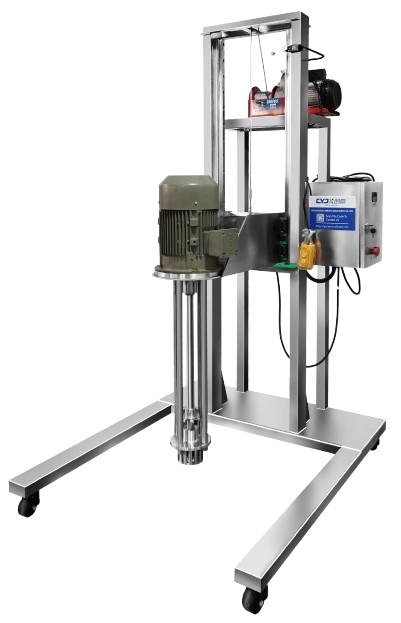
High-Shear Mixer
Disperses suitable powders and breaks down agglomerates
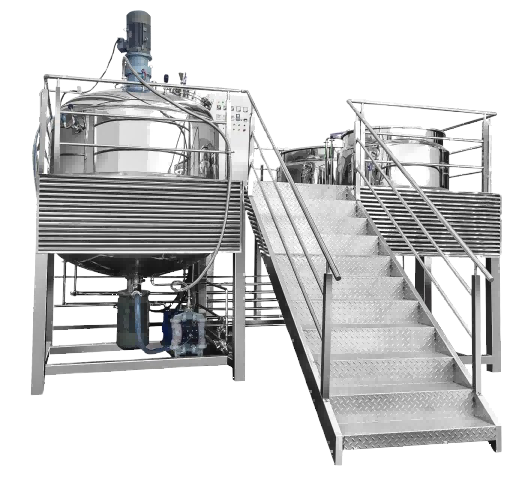
Vacuum Toothpaste Mixer
Combines high-viscosity mixing with controlled deaeration and, where appropriate, homogenization
Sanitary Transfer Pump
Transfers finished toothpaste to downstream equipment
Tube Filling and Sealing Machine
Dispenses toothpaste into tubes and seals the open ends
Packaging Equipment
Handles coding, inspection, cartoning, and case packing
Among these machines, the toothpaste mixing system plays a central role in determining how effectively ingredients are incorporated.
However, manufacturers should not select a mixer based on tank capacity alone.
The equipment must also accommodate the product's working volume, viscosity range, abrasive content, mixing sequence, and cleaning requirements.
For example, a production line making transparent gel toothpaste may have different mixing requirements from one producing a high-solids white abrasive paste.
Similarly, a manufacturer planning multiple formulations should consider how easily the equipment can be cleaned and adjusted between batches.
Where vacuum processing is required, the design of the vessel, agitators, seals, and discharge system also becomes important.
The most suitable manufacturing line is one that matches the formulation and production objectives rather than simply offering the highest mixing speed or the largest vessel.
7. How Is Striped Toothpaste Made?
Striped toothpaste adds another level of complexity to the manufacturing process.
Unlike ordinary single-color toothpaste, striped products contain two or more visually distinct paste portions that must retain a recognizable pattern when the consumer dispenses the product.
Manufacturers generally prepare the main toothpaste and colored portions according to their respective formulations.
These materials must have compatible processing and flow characteristics so that the intended appearance can be maintained during filling, storage, and dispensing.
One manufacturing approach uses specialized filling equipment with separate material channels or nozzles.
The machine introduces the different toothpaste portions in a controlled arrangement, creating a multicolored pattern inside the tube.
Other designs use internal tube structures or dispensing arrangements that form the visible stripes as toothpaste leaves the package.
Therefore, not every striped toothpaste uses the same filling technology.
The appearance of the finished product depends on several factors.
The relative flow behavior of the different paste portions affects how they move through the filling system
The delivery rates and distribution of each portion influence stripe thickness and consistency.
The equipment must prevent unwanted mixing between the colors.
The packaging design must support the intended visual effect when the product is dispensed.
Manufacturers producing striped toothpaste should therefore evaluate the complete relationship between formulation, filling equipment, and tube design.
The goal is not simply to add color, but to create a stable and repeatable visual pattern throughout production.
8.How Do Manufacturers Control Toothpaste Quality?
Manufacturing toothpaste successfully requires more than producing a mixture that looks smooth.
A finished batch must meet defined quality specifications, remain stable during its intended shelf life, and perform consistently when dispensed and used.
Quality control therefore covers the paste itself as well as the filling and packaging process.
8.1 Viscosity and Texture Consistency
Viscosity is one of the most important processing and product-quality characteristics of toothpaste.
It affects how the paste behaves inside the mixing vessel, moves through transfer lines, enters tubes, and flows when consumers squeeze the package.
However, toothpaste is often a non-Newtonian material.
Because toothpaste responds differently to varying shear forces, manufacturers must use clearly defined testing conditions to obtain meaningful and comparable viscosity measurements.
Manufacturers therefore need consistent measurement procedures.
Depending on the formulation, these may specify the instrument, spindle or geometry, temperature, shear conditions, and measurement time.
Texture assessment can also include smoothness, firmness, extrudability, and the ability of the paste to retain its shape after dispensing.
These characteristics should remain within the approved product specifications from batch to batch.
8.2 Appearance, Uniformity, and Stability
A high-quality toothpaste should have a consistent appearance and an appropriate distribution of its ingredients.
Manufacturers inspect the paste for visible lumps, unwanted particles, air bubbles, color variation, and signs of separation.
Uniformity is particularly important for formulations containing suspended abrasives or decorative particles.
If the solid ingredients are poorly distributed, different portions of the same batch may have inconsistent characteristics.
Stability testing provides additional information about how the formulation behaves during storage.
Depending on the product and testing program, manufacturers may evaluate changes in appearance, viscosity, phase separation, and packaging compatibility under defined conditions.
By monitoring changes in texture, appearance, and formulation stability under controlled storage conditions, manufacturers can evaluate how well the toothpaste preserves its quality over time.
8.3 pH, Active Ingredients, and Microbiological Quality
Chemical and microbiological testing forms another important part of toothpaste quality control.
The pH of a formulation may influence ingredient compatibility and product stability.
Manufacturers therefore measure it using an appropriate, standardized method and compare the result with the approved specification.
For toothpaste containing fluoride or other regulated active ingredients, testing may also be required to verify the relevant ingredient content or availability.
The exact analytical requirements depend on the product formulation and the regulations of the intended market.
Microbiological quality must also be controlled.
Although toothpaste formulations can contain ingredients that limit microbial growth, manufacturers should not assume that every product is automatically protected against contamination.
Appropriate raw-material controls, equipment sanitation, hygienic manufacturing practices, and microbiological testing support product safety and consistency.
The testing program should reflect the product's risk profile and applicable regulatory requirements.
8.4 Filling Accuracy and Packaging Integrity
Quality control continues after the toothpaste leaves the mixing vessel.
Filling machines must deliver the intended quantity into each tube, while sealing equipment must produce a reliable closure.
Manufacturers may check filled tube weight, seal appearance, leakage, coding accuracy, and package condition.
For striped toothpaste, inspection may also include the consistency of the visual pattern.
Automated systems can help identify and reject defective units, but the required inspection method depends on the production line and quality standards.
Batch identification and traceability are equally important.
Accurate production records allow manufacturers to connect finished products with the raw materials, processing conditions, equipment, and inspections associated with each batch.
Ultimately, effective quality control helps ensure that the toothpaste leaving the factory matches the product that was designed and approved.
9.Conclusion
So, how is toothpaste made? Industrial toothpaste manufacturing combines ingredient preparation, liquid-base mixing, powder dispersion, controlled agitation, deaeration, quality testing, and automated packaging.
Each stage contributes to the finished product. Proper powder incorporation helps prevent lumps, suitable mixing systems support uniform texture, and vacuum processing helps reduce trapped air. Meanwhile, consistent quality testing ensures that the paste meets its intended specifications before it reaches consumers.
Because toothpaste formulations differ in viscosity, abrasive content, and functional ingredients, there is no single manufacturing configuration that suits every product.
Manufacturers achieve more reliable results when they match their equipment and processing conditions to the characteristics of the formulation.
For businesses planning a new toothpaste production line or improving an existing process, CreWin Machinery offers industrial toothpaste mixing equipment and application solutions designed around different production requirements.

 ZS Lab Vacuum Emulsifying Mixer
 ZEx Ex-Proof Vacuum Homogenizer Mixer without Hydraulics
 ZA Lab Vacuum Homogenizer
 ZB Vacuum Homogenizer Emulsifier without Hydaulics
 ZB Simplified Vacuum Homogenizer Mixer
 ZA Vacuum Homogenizer Mixer without Hydraulics
 ZS Vacuum Emulsifying Mixer
 ZB Vacuum Homogenizer Emulsifier