How is Ketchup Made: From History to Modern Manufacturing
Discover how ketchup is made, from ingredients and processing to high-shear mixing and quality control.
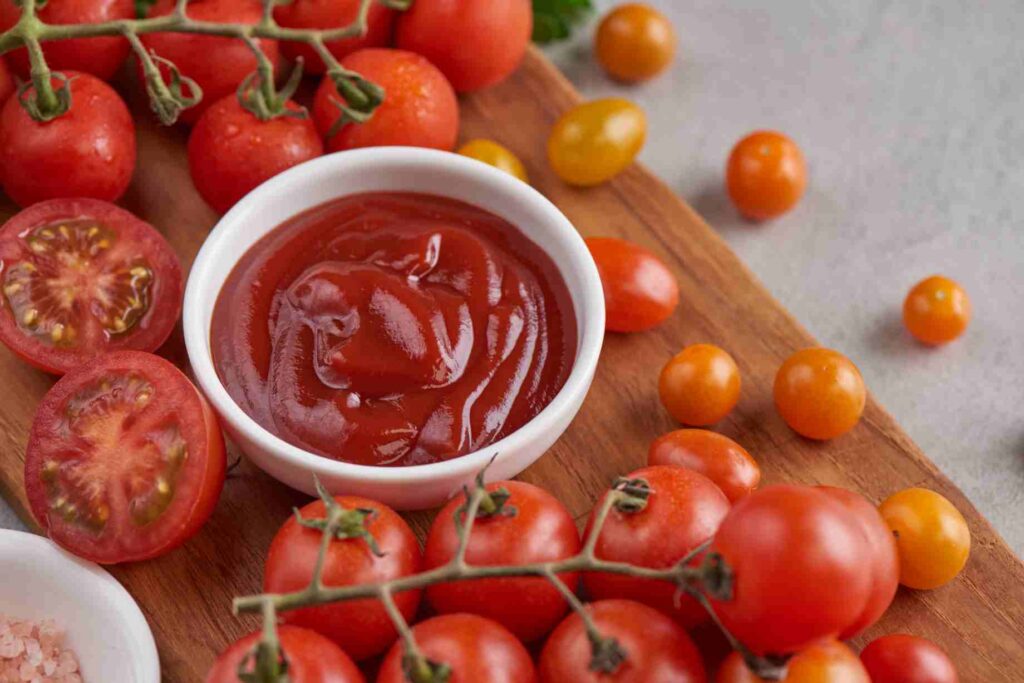
Ketchup is one of the world's most familiar condiments. From burgers and French fries to sandwiches and ready-to-eat meals, its distinctive combination of sweetness, acidity, and tomato flavor makes it a staple in homes, restaurants, and food processing facilities.
However, producing ketchup on an industrial scale involves much more than blending tomatoes with sugar and vinegar. Manufacturers must carefully control raw material quality, tomato concentration, ingredient dispersion, viscosity, temperature, and food safety. Even small changes in processing conditions can influence the final product's texture, appearance, and consistency.
Modern ketchup factories rely on specialized equipment to manage these requirements. Tomato crushers, refining machines, industrial mixing tanks, high-shear mixers, homogenizers, and automated filling systems work together to transform raw ingredients into a consistent commercial product.
This article explores the history of ketchup, its essential ingredients, the industrial manufacturing process, common production challenges, and the equipment that helps manufacturers achieve reliable results.
Key Takeaways
Industrial ketchup production involves tomato preparation, refining, concentration, ingredient blending, cooking, consistency adjustment, heat treatment, and packaging.
Tomato solids, natural pectin, processing conditions, and optional thickeners influence ketchup viscosity and texture.
High-shear mixing helps manufacturers disperse powdered ingredients, break down agglomerates, and incorporate concentrated tomato paste into liquid formulations.
Different production methods require different equipment. A factory that starts with purchased tomato paste may need fewer processing stages than one that handles fresh tomatoes.
Consistent ketchup quality depends on controlling viscosity, acidity, soluble solids, appearance, microbial safety, and packaging integrity.
1. History of Ketchup: How Was Ketchup Invented?
Modern ketchup has a long history, and its earliest versions looked very different from the tomato-based condiment people recognize today.
The word ketchup has historical connections to fermented sauces from Asia. One widely discussed explanation links the term to fermented fish-based condiments that traders encountered in Southeast Asia. Although historians continue to debate the exact linguistic route, these early sauces contained no tomatoes.
During the seventeenth and eighteenth centuries, British traders and cooks encountered Asian condiments and began developing their own versions. Their recipes often included mushrooms, oysters, walnuts, anchovies, and various spices. These sauces provided savory flavors rather than the familiar sweet-and-sour tomato taste.
Tomatoes entered the story later.
During the nineteenth century, American cooks increasingly experimented with tomato-based ketchup recipes. Early formulations combined tomatoes with vinegar, spices, and other seasonings. Over time, commercial producers refined these recipes to improve flavor consistency, storage stability, and manufacturing efficiency.
Henry J. Heinz helped popularize commercially produced tomato ketchup during the late nineteenth century. However, the product's development involved many earlier recipes and producers rather than a single inventor.
As food processing technology advanced, manufacturers introduced more consistent tomato preparation, concentration, mixing, heat treatment, and packaging methods.
Today, industrial ketchup production combines traditional ingredients with carefully controlled manufacturing systems. Although individual brands use different recipes, most modern products share a common foundation: tomatoes, acid, sweeteners, salt, and seasonings.
Mauris eleifend ante at augue maximus, eget facilisis nibh sagittis. Donec luctus nunc vitae tortor vulputate, vel posuere neque bibendum. Integer vitae magna ultricies, posuere purus non, pretium elit. Nam iaculis fermentum nunc non varius.
Curabitur viverra tincidunt sapien in dictum. Sed eget libero in lorem egestas ornare. Donec non vestibulum sem, id viverra sem. Pellentesque sit amet gravida enim. Sed in sem risus. Donec vehicula, augue vel egestas imperdiet, nisl justo vestibulum urna, non pulvinar augue nulla ut libero.
2. What Is Ketchup Made Of?
Tomatoes form the foundation of traditional tomato ketchup, but several additional ingredients determine its flavor, acidity, texture, and appearance.
Manufacturers adjust their formulations according to regional preferences, product positioning, raw material characteristics, and production requirements.
The following ingredients appear in many commercial ketchup recipes.
Ingredient
Primary Function in Ketchup
Tomatoes or Tomato Paste
Provide tomato flavor, natural color, solids, and texture-forming components
Sugar or Sweeteners
Balance acidity and contribute sweetness
Vinegar
Adds acidity and contributes to the characteristic flavor
Salt
Enhances flavor and balances other ingredients
Spices and Seasonings
Create distinctive aroma and taste profiles
Water
Adjusts concentration and supports ingredient blending
Optional Thickeners
Help certain formulations achieve their target viscosity and texture
Tomatoes and Tomato Paste
Tomatoes supply the characteristic flavor, red color, and much of the physical structure of ketchup.
Manufacturers may begin with fresh tomatoes or purchase concentrated tomato paste from specialized processors.
Fresh tomatoes contain substantial amounts of water. Therefore, factories that handle fresh fruit usually remove part of this water during processing to create a more concentrated tomato base.
Tomato paste offers a different starting point. Because suppliers have already processed and concentrated the tomatoes, ketchup manufacturers can focus on dilution, formulation, mixing, and subsequent processing.
In both cases, tomato solids influence the final product's consistency.
Natural pectin and tomato fibers also contribute to the texture. Their behavior depends on the original tomato material and the processing conditions.
Sugar and Sweeteners
Sugar balances the acidity of tomatoes and vinegar while contributing to ketchup's familiar sweet-and-sour flavor.
Commercial producers may use sucrose, glucose-fructose syrup, or other permitted sweeteners according to their recipes and target markets.
However, sweeteners do more than influence taste. Changes in their concentration can affect total soluble solids and the overall sensory characteristics of the product.
Therefore, manufacturers must evaluate sweetness alongside acidity, tomato concentration, and viscosity.
Vinegar and Salt
Vinegar gives ketchup its characteristic tangy flavor and helps manufacturers control product acidity.
Different vinegar types can create subtle differences in flavor. Nevertheless, the final acid balance must satisfy both sensory targets and applicable food safety requirements.
Salt enhances tomato flavor and supports the overall seasoning profile.
Because consumers expect a consistent taste from each bottle, industrial producers carefully measure both ingredients during formulation.
Spices and Seasonings
Many ketchup recipes contain onion, garlic, cloves, cinnamon, allspice, or other seasonings.
Some factories use whole spices to prepare flavor extracts, while others incorporate powdered spices or prepared seasoning blends.
The selected format affects the mixing process.
For example, powdered seasonings require sufficient dispersion to prevent visible particles or localized flavor differences. Liquid extracts may enter the formulation more easily, although manufacturers still need adequate mixing to distribute them evenly.
Optional Thickeners
Certain ketchup formulations use xanthan gum, starch, modified starch, or other permitted thickening ingredients.
These materials help manufacturers adjust consistency, particularly when the natural tomato structure alone cannot achieve the desired texture.
However, not every ketchup recipe requires an additional thickener.
Tomato concentration, pectin, fiber structure, and processing conditions may provide sufficient viscosity in some formulations.
Furthermore, powdered thickeners introduce their own manufacturing challenges. If operators add them too quickly or use inadequate mixing, the particles may form stubborn lumps.
For this reason, ingredient selection and mixing technology must work together.
3. How Is Ketchup Made in a Factory?
Industrial ketchup manufacturing follows a series of interconnected operations. Each stage prepares the product for the next while helping manufacturers control flavor, consistency, appearance, and safety.
The exact sequence varies among factories.
Some facilities process fresh tomatoes from the beginning. Others purchase tomato paste and start with ingredient preparation and blending.
The following seven steps describe a representative industrial process.
Step 1: Select, Wash, and Sort the Tomatoes
For factories that process fresh tomatoes, production begins with raw material selection.
Tomato quality influences the final ketchup's color, flavor, concentration, and overall consistency. Therefore, processors inspect incoming fruit and remove tomatoes that fail their quality requirements.
Manufacturers generally consider several characteristics:
Ripeness and color development
Visible damage or deterioration
Foreign materials and contamination
Consistency of incoming raw materials
Suitability for the intended processing method
After inspection, washing equipment removes soil, debris, and other surface contaminants.
Sorting systems then separate unsuitable tomatoes from acceptable fruit. Depending on the factory's scale, workers may perform part of this task manually, while automated systems handle larger quantities.
Consistent sorting improves the quality of the material entering the processing line.
Meanwhile, proper handling helps reduce unnecessary damage before crushing.
Factories that purchase commercially prepared tomato paste normally skip this fresh-fruit preparation stage. Instead, they inspect incoming paste according to their supplier specifications and internal quality standards.
Step 2: Crush and Heat the Tomato Pulp
Once the factory prepares the tomatoes, crushing equipment breaks the fruit into smaller pieces.
This operation releases juice and creates a mixture of tomato flesh, seeds, skin, and liquid.
The processor then applies a suitable thermal treatment.
One important method in industrial tomato processing is the Hot Break process.
What Is the Hot Break Process?
Hot Break processing rapidly heats crushed tomatoes to a relatively high temperature, often around 90°C or within a process-specific temperature range.
The treatment helps limit the activity of enzymes that break down pectin.
Pectin contributes to the structural properties of tomato products. When certain enzymes degrade this material, the resulting pulp may lose some of its natural thickening capacity.
By reducing enzyme activity early in processing, Hot Break treatment helps preserve the viscosity-building characteristics of the tomato pulp.
This approach can be particularly useful for ketchup and other thick tomato products.
However, thermal treatment also influences flavor, color, and other sensory characteristics.
Therefore, processors select heating conditions according to the desired product.
Another approach, commonly called Cold Break, uses lower processing temperatures and may preserve different flavor and texture characteristics.
Neither method represents a universal choice for every ketchup formulation.
Instead, manufacturers consider the intended product texture, raw material properties, and subsequent processing requirements.
Step 3: Refine and Concentrate the Tomato Pulp
After crushing and heating, the tomato pulp still contains seeds, skin fragments, and other coarse materials.
Refining equipment separates these unwanted components from the usable tomato fraction.
Depending on the processing system, screens, finishers, or pulping machines help manufacturers achieve the desired particle characteristics.
This step improves smoothness and prepares the material for further concentration.
Why Does Tomato Concentration Matter?
Fresh tomatoes contain a high percentage of water. However, ketchup requires a much thicker consistency than ordinary tomato juice.
Therefore, processors often remove part of the water before final formulation.
Industrial evaporation equipment concentrates the tomato material by reducing its moisture content.
Vacuum evaporators offer one common approach. By operating under reduced pressure, these systems allow water evaporation at lower temperatures than conventional atmospheric boiling.
This can help manufacturers manage thermal exposure while concentrating the tomato pulp.
As water leaves the mixture, the relative concentration of tomato solids increases.
These solids contribute to flavor intensity, color, and the physical structure of the finished ketchup.
However, excessive concentration can create handling and mixing difficulties.
For that reason, manufacturers monitor the concentration process and select an appropriate endpoint for the next production stage.
Fresh Tomatoes vs. Prepared Tomato Paste
Not every ketchup factory needs a tomato crushing and concentration line.
A facility that purchases tomato paste can receive concentrated tomato material directly from a supplier.
Operators then dilute and blend the paste with water, vinegar, sweeteners, salt, and other ingredients.
This production model reduces the number of upstream processing operations.
Nevertheless, it places greater importance on effective paste incorporation because concentrated tomato material can be difficult to distribute uniformly through a lower-viscosity liquid.
Step 4: Add Ingredients and Mix the Ketchup
Ingredient blending represents one of the most important stages in industrial ketchup production.
During this step, manufacturers combine the tomato base with water, sweeteners, vinegar, salt, seasonings, and any optional formulation ingredients.
The objective extends beyond simply placing all materials in the same tank.
A successful mixing operation must distribute ingredients evenly, prevent persistent lumps, and prepare a consistent product for subsequent processing.
Preparing the Liquid Phase
Operators typically begin by introducing an appropriate portion of the liquid ingredients into a mixing tank.
An industrial agitator creates circulation and helps distribute soluble ingredients throughout the mixture.
Depending on the recipe, the factory may add sugar, salt, vinegar, or prepared seasoning solutions at different stages.
The ingredient sequence matters because some materials dissolve readily, while others require special dispersion conditions.
Furthermore, viscosity can increase as the formulation develops, which changes the mixing requirements.
Incorporating Powdered Ingredients
Powdered ingredients can present difficulties during ketchup production.
Sugar and salt generally dissolve in suitable liquid conditions. However, certain thickeners behave differently.
When xanthan gum or similar materials contact water, their outer surfaces may hydrate rapidly.
This can create a gel-like outer layer that traps dry powder inside.
As a result, the mixture may contain agglomerates even after prolonged conventional stirring.
To reduce this problem, manufacturers control powder addition rates, liquid movement, and mixing intensity.
Some production lines also use dedicated powder-liquid mixing equipment.
How High-Shear Mixing Helps
A high-shear mixer uses a rapidly rotating rotor and a stationary stator to create intense localized mixing action.
As the rotor turns, it draws material toward the mixing head.
The equipment then subjects the material to strong velocity gradients as it passes through the rotor-stator region.
This action helps disperse powdered ingredients, break down certain agglomerates, and distribute components through the liquid.
Meanwhile, circulation returns material to the mixing zone for additional processing.
High-shear mixing can therefore improve the preparation of ketchup formulations that contain difficult-to-disperse ingredients.
However, successful operation still depends on the formulation, equipment configuration, addition sequence, and processing conditions.
Step 5: Cook, Homogenizer, and Adjust the Consistency
After ingredient incorporation, manufacturers continue processing the ketchup to achieve the required flavor, texture, and concentration.
Cooking conditions depend on the formulation and the factory's production system.
Heating may support ingredient dissolution, flavor development, and other process objectives.
At the same time, operators must control temperature and residence time to avoid unnecessary changes in product quality.
Why Is Ketchup So Thick?
Ketchup viscosity results from several interacting factors rather than one ingredient alone.
First, tomato solids contribute to the overall concentration and body of the product.
Second, natural pectin and tomato fibers influence how the material retains water and responds to movement.
Third, processing conditions affect the structure of these components.
Finally, some formulations contain additional thickeners that modify flow behavior.
Ketchup also displays non-Newtonian characteristics.
In practical terms, its apparent viscosity changes under different shear conditions.
For example, ketchup may resist movement while resting but flow more readily when someone shakes or squeezes the container.
This behavior helps explain why manufacturers must evaluate texture under controlled testing conditions.
High-Shear Mixing vs. High-Pressure Homogenization
Although both technologies influence product uniformity, high-shear mixing and high-pressure homogenization operate differently.
A rotor-stator high-shear mixer primarily supports ingredient incorporation, dispersion, and localized particle or agglomerate breakdown.
A high-pressure homogenizer forces material through a specially designed restriction under substantial pressure.
The resulting flow conditions can change particle structures and improve the physical characteristics of suitable formulations.
Some ketchup processes use high-pressure homogenization to modify the tomato fiber structure and improve consistency.
Other recipes rely more heavily on natural tomato solids, added thickeners, and conventional or high-shear mixing.
Therefore, manufacturers should select homogenization technology according to the desired texture and actual process requirements.
Using more shear does not automatically produce better ketchup.
Excessive or unsuitable processing may change texture in undesirable ways.
Step 6: De-Aerate and Apply the Required Heat Treatment
Mixing operations can introduce air into ketchup.
Entrained air may affect appearance, filling behavior, and certain aspects of product stability.
For example, visible bubbles can make the product appear less uniform.
In addition, oxygen exposure may contribute to quality changes during processing or storage.
Vacuum deaeration offers one method for reducing entrained air.
A deaeration system exposes the product to reduced pressure under controlled conditions, allowing some of the trapped gases to escape.
Manufacturers may integrate this operation with other processing stages, depending on the production line.
Heat Treatment and Food Safety
Ketchup manufacturers must also control microbial hazards and meet the safety requirements that apply to their products.
A validated thermal process forms an important part of many commercial ketchup manufacturing systems.
However, the appropriate treatment depends on several factors:
Product acidity and formulation
Initial microbial conditions
Packaging material and container size
Filling method
Intended storage conditions
Applicable food safety regulations
Some production lines use hot-filling systems, while others adopt different validated processing and packaging arrangements.
Because these systems vary, manufacturers should not assume that one universal temperature and holding time suits every ketchup product.
Instead, qualified food processing specialists should establish and validate the appropriate process.
Step 7: Fill, Seal, Cool, and Package the Ketchup
Once the ketchup meets the required processing conditions, the production line transfers it to the filling system.
Industrial manufacturers use different packaging formats according to their customers and distribution channels.
Common options include plastic squeeze bottles, glass bottles, sachets, pouches, and larger food-service containers.
Selecting a Suitable Filling System
Ketchup's viscosity affects filling performance.
The product may not flow like water, especially at low shear rates.
Therefore, manufacturers need filling equipment that can handle thick sauces while maintaining suitable accuracy and hygiene.
Depending on the application, a production line may use piston filling, servo-driven volumetric systems, or other filling technologies.
The equipment must also match the packaging format and production capacity.
After filling, the line closes or seals the containers.
Subsequent operations may include cooling, labeling, date coding, inspection, case packing, and palletizing.
Throughout this stage, operators monitor fill quantities, seal integrity, and packaging appearance.
Finally, the factory releases finished products according to its quality assurance procedures.
4. Common Problems in Ketchup Manufacturing
Although ketchup contains familiar ingredients, industrial production can present several mixing and processing challenges.
These problems become particularly important when manufacturers handle concentrated tomato paste, powdered thickeners, or formulations with high viscosity.
Understanding the causes helps production teams choose suitable equipment and operating conditions.
4.1 Difficulty Diluting Tomato Paste
Concentrated tomato paste does not always blend quickly with water.
Its high solids content and thick consistency can make the initial mixing stage difficult.
When operators add large quantities of paste to a low-viscosity liquid, conventional agitators may struggle to disperse the concentrated material.
The agitator might create movement throughout the tank while leaving some paste in relatively large masses.
Consequently, the factory may require longer processing times or additional mixing stages.
The problem becomes more noticeable when the vessel geometry, agitator design, and product viscosity do not match.
Furthermore, incomplete paste dispersion can create local differences in tomato concentration.
These differences may affect the uniformity of subsequent processing.
4.2 Agglomerate Formation in Powdered Ingredients
Powdered thickeners often create another difficulty.
When operators introduce certain hydrocolloids directly into water, the particle surfaces may hydrate before the interior becomes wet.
This rapid surface hydration can produce lumps with dry material trapped inside.
Manufacturers sometimes refer to these formations as fish eyes.
Once these agglomerates develop, conventional stirring may not break them down easily.
As a result, the product may contain unevenly hydrated material.
Such lumps can affect texture, processing efficiency, and product appearance.
They may also create additional difficulties for downstream equipment.
4.3 Incomplete Hydration and Ingredient Build-Up
Even when powder particles enter the liquid successfully, complete hydration may require sufficient time and appropriate mixing conditions.
Different thickening ingredients respond differently to temperature, shear, concentration, and the presence of other formulation components.
Therefore, manufacturers must account for the behavior of each ingredient.
Poor circulation may also allow material to accumulate around vessel walls, internal fittings, or mixing components.
These deposits reduce the effectiveness of ingredient incorporation.
In addition, operators may struggle to maintain consistent product characteristics if some ingredients remain outside the main circulation pattern.
The problem becomes more complicated as viscosity increases.
4.4 Long Mixing Times and Uneven Premixing
Traditional agitators can perform many industrial mixing tasks effectively.
However, they may not provide sufficient localized shear for rapid dispersion of certain powders or concentrated ingredients.
In these situations, operators may extend mixing time to compensate.
Longer processing cycles reduce the number of batches a production line can complete within a given period.
They may also increase energy consumption and thermal exposure, depending on the process.
Furthermore, uneven premixing can affect downstream operations.
If a high-pressure homogenizer receives a poorly dispersed mixture, the inconsistent feed may make process control more difficult.
For this reason, manufacturers should consider premix quality rather than focusing only on the final mixing time.
4.5 Loss of Gloss and Texture
Consumers often associate high-quality ketchup with a smooth texture, consistent red appearance, and attractive surface gloss.
However, processing conditions can influence these characteristics.
Changes in shear intensity, temperature, particle structure, and formulation may alter how the product looks and flows.
Some homogenization processes can reduce the apparent gloss of certain ketchup formulations.
Similarly, inappropriate processing conditions may produce a texture that differs from the manufacturer's target.
Because ketchup formulations vary, no single mixing method guarantees the same visual result for every product.
Manufacturers must therefore evaluate processing effects through controlled product trials.
5. Solutions to Ketchup Manufacturing Problems
High-shear mixing technology offers several ways to address the ingredient dispersion challenges described above.
Rotor-stator mixers create localized mechanical action that conventional low-shear agitators may not provide.
By combining shear with effective material circulation, these systems can improve powder incorporation, tomato paste dispersion, and premix uniformity.
However, equipment selection remains important. Manufacturers must match the mixer design and operating conditions to the formulation and required production capacity.
5.1 High-Shear Mixing for Powder Incorporation
A typical high-shear mixing operation begins with an appropriate liquid phase inside the mixing vessel.
The operator starts the mixer and establishes suitable circulation before introducing the powdered ingredients.
As the rotor spins, it creates flow toward the mixing head.
The moving liquid helps draw incoming material into the active mixing region.
This process increases contact between the powder and the surrounding liquid.
Compared with poorly controlled manual addition into a stagnant or weakly circulating vessel, effective high-shear incorporation can reduce the tendency of certain ingredients to form large dry clusters.
Nevertheless, the powder addition rate remains important.
If operators introduce material faster than the system can disperse it, agglomerates may still develop.
For that reason, production teams should coordinate powder feeding with the mixer's actual dispersion capacity.
Some factories also use dedicated powder induction systems to improve the consistency of ingredient addition.
5.2 Breaking Agglomerates and Improving Hydration
Once the material enters the rotor-stator region, it encounters intense localized velocity differences.
These conditions help break down certain powder agglomerates and distribute their components through the liquid.
The stator then directs the processed material back into the surrounding mixture.
Repeated circulation exposes additional material to the mixing head.
Over time, this action can improve dispersion and create more uniform conditions for hydration.
However, dispersion and hydration are not identical.
A mixer can distribute particles effectively without immediately completing every ingredient's hydration process.
Some hydrocolloids still require a suitable hydration period, temperature, or formulation sequence.
Therefore, manufacturers should evaluate both the initial dispersion quality and the final developed viscosity.
5.3 Efficient Tomato Paste Dispersion
High-shear mixing also helps manufacturers incorporate concentrated tomato paste into liquid formulations.
As the mixer circulates the liquid phase, operators gradually introduce the tomato paste.
The rotor-stator action exposes concentrated material to localized shear and promotes contact with the surrounding liquid.
Repeated mixing reduces concentration differences throughout the batch.
As a result, the manufacturer can achieve a more uniform tomato base before subsequent cooking or homogenization.
An in-line high-shear mixer offers another configuration.
Instead of processing material only inside the tank, the production system pumps the mixture through an external rotor-stator mixing head.
The factory may operate this equipment in a recirculation loop or integrate it into a suitable process line.
Such arrangements can provide useful flexibility for larger batches and existing mixing vessels.
However, pumpability, pressure loss, product viscosity, and equipment compatibility all influence the final system design.
5.4 Improving Premix Quality and Final Consistency
A well-prepared premix supports more predictable downstream processing.
When ingredients enter the next stage in a more uniform condition, operators can focus on controlling cooking, homogenization, and final consistency rather than correcting large mixing defects.
High-shear mixing may also reduce the need for separate powder premixing operations in some formulations.
For example, an appropriate rotor-stator system may incorporate certain thickeners directly into the main batch.
However, manufacturers should confirm this capability through actual formulation trials.
The technology can also support texture adjustments in suitable applications.
Nevertheless, high-shear mixing cannot replace every function of a high-pressure homogenizer.
While rotor-stator mixers excel at dispersing ingredients, certain ketchup formulations need the more intensive particle refinement that high-pressure homogenization provides.
Therefore, manufacturers should compare equipment options against measurable product targets.
These targets may include viscosity, particle characteristics, visual appearance, processing time, and batch consistency.
Additional Process Improvements
Although high-shear equipment addresses several mixing problems, factories should not overlook basic process design.
A successful ketchup production system also requires:
Controlled ingredient addition: Operators should introduce materials in a sequence that supports dissolution, dispersion, and hydration.
Suitable temperature management: The process must maintain conditions that support ingredient performance without compromising product quality.
Effective vessel circulation: Mixing equipment should minimize poorly circulated regions within the practical limits of the vessel design.
Appropriate batch sizing: Manufacturers should operate equipment within its intended working-volume range.
Consistent operating procedures: Standardized recipes, addition rates, processing times, and inspection methods help reduce batch variation.
Together, these measures create a more reliable manufacturing process than equipment selection alone.
6. What Equipment Is Used in Ketchup Manufacturing?
Ketchup factories use different machines according to their raw material source, production capacity, recipe, and packaging requirements.
A plant that processes fresh tomatoes requires more upstream equipment than a facility that purchases concentrated tomato paste.
Similarly, a small batch operation may use a compact mixing system, while a large manufacturer may prefer an integrated production line.
The following table outlines the main equipment categories.
Manufacturing Stage
Equipment
Main Function
Tomato Preparation
Washing and Sorting Machine
Cleans tomatoes and separates unsuitable raw materials
Crushing and Pulping
Tomato Crusher / Pulper
Breaks down tomatoes and prepares pulp
Refining
Tomato Finisher / Refining Machine
Removes seeds, skin fragments, and unwanted coarse material
Concentration
Vacuum Evaporator
Removes water and increases tomato solids concentration
Ingredient Blending
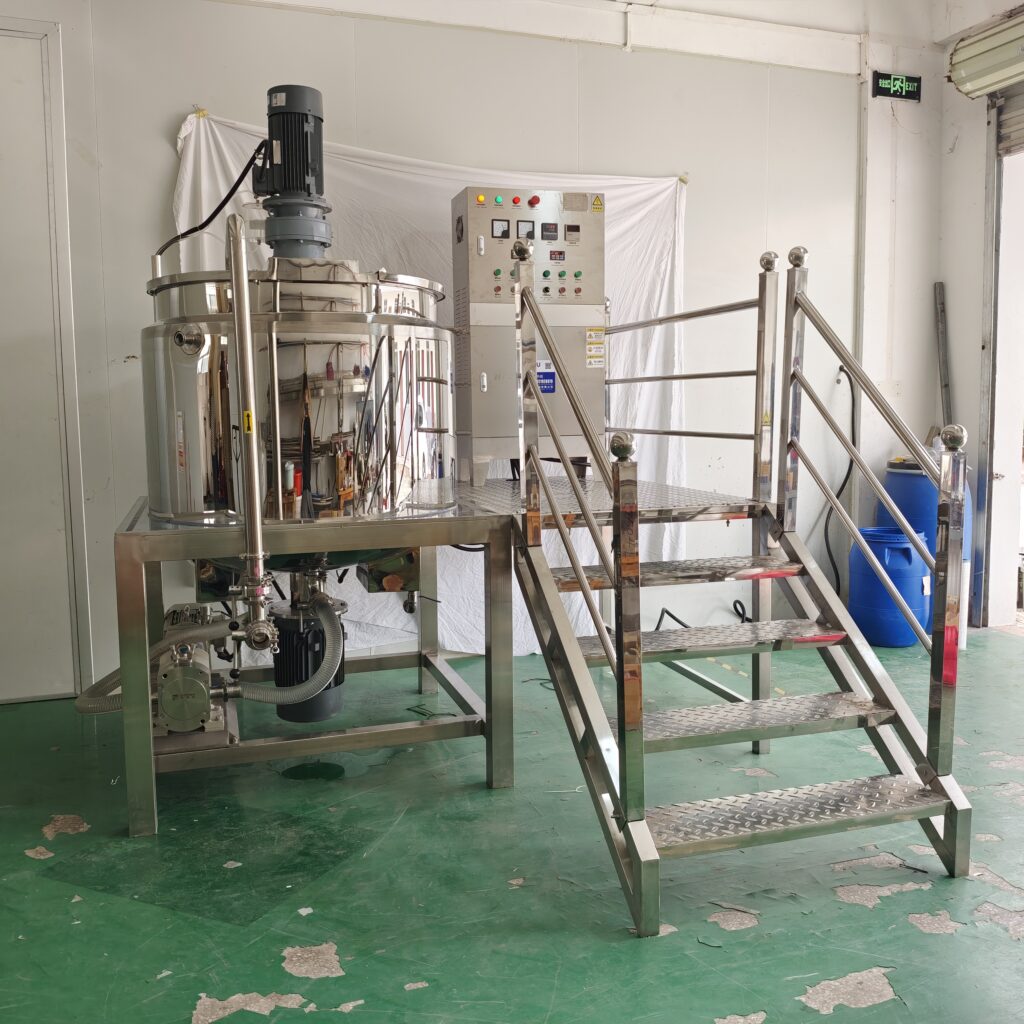
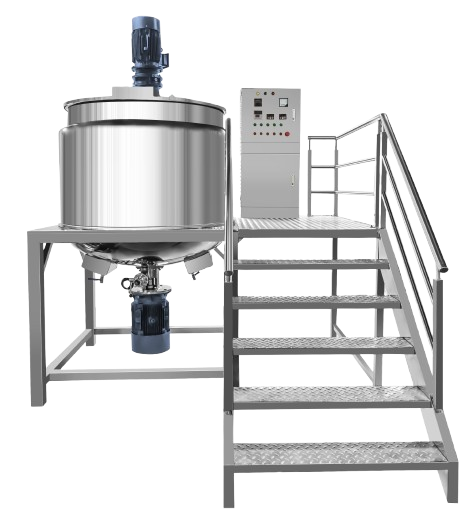
Jacketed Mixing Tank
Combines ingredients and supports controlled heating
Powder Dispersion
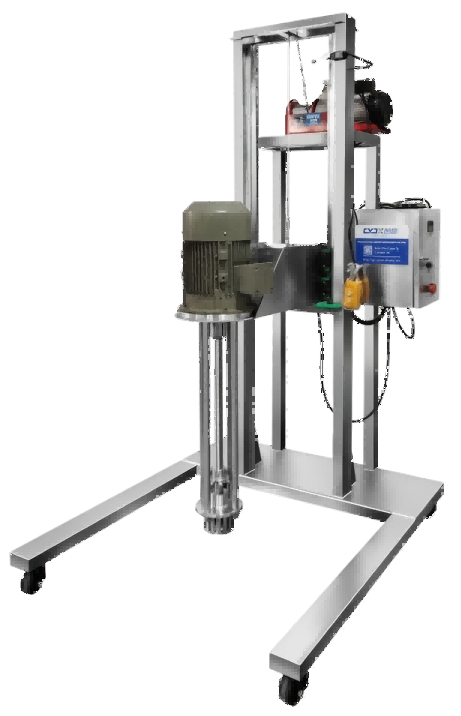
High-Shear Batch Mixer
Disperses powdered ingredients and breaks down agglomerates
Recirculation Mixing
High-Shear In-Line Mixer
Processes circulating material through a rotor-stator mixing head
Powder Incorporation
Powder-Liquid Mixer
Introduces powdered materials into a flowing liquid stream
Vacuum Mixing
Vacuum Homogenizer Mixer
Combines mixing, selected homogenization functions, and vacuum processing
High-Pressure Processing
High-Pressure Homogenizer
Modifies suitable product structures under high-pressure conditions
Air Removal
Vacuum Deaerator
Reduces entrained air
Filling and Packaging
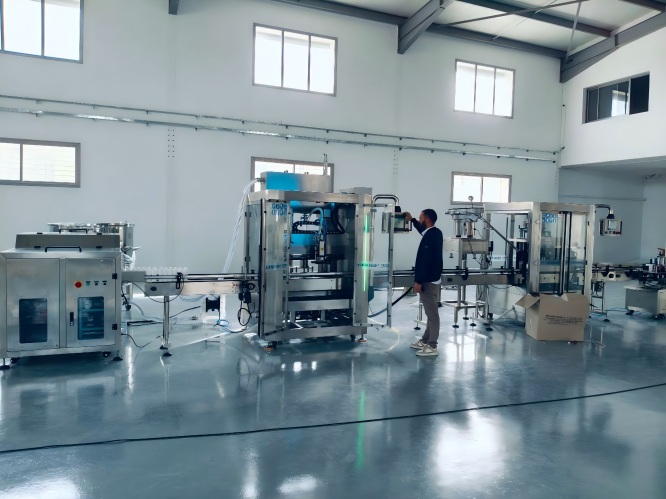
Automatic Filling and Packaging Line
Fills, seals, labels, and packs the finished product
A jacketed mixing tank combines a processing vessel with an external heat-transfer jacket.
The jacket allows a suitable heating or cooling medium to transfer thermal energy through the vessel wall.
Meanwhile, an internal agitator circulates the ingredients.
This configuration can support ketchup blending, temperature adjustment, and certain cooking operations.
Manufacturers may select different agitator designs according to the product's viscosity and flow behavior.
For example, an anchor agitator can help move viscous material near the vessel wall, while other impeller configurations may suit lower-viscosity mixtures.
However, no single agitator design performs every mixing task equally well.
Factories should consider vessel geometry, batch size, viscosity, heat-transfer requirements, and cleaning access.
A high-shear batch mixer processes ingredients directly inside a vessel.
Its rotor-stator head generates localized shear that helps disperse powders and concentrated ingredients.
This equipment can suit batch operations where manufacturers need effective ingredient incorporation without building a separate external recirculation system.
However, the mixer must provide adequate circulation throughout the working volume.
A powerful mixing head alone cannot guarantee uniform results if large portions of the tank receive insufficient movement.
The final production stage requires equipment that handles ketchup without compromising filling accuracy or hygiene.
Manufacturers should evaluate nozzle design, filling method, container compatibility, and cleaning requirements.
Thick sauces may require different handling characteristics from low-viscosity beverages.
In addition, a production line must coordinate filling speed with capping, sealing, labeling, and inspection equipment.
A balanced system reduces bottlenecks and helps maintain reliable production output.
How to Choose the Right Ketchup Manufacturing Equipment
Equipment selection should begin with the product rather than the machine catalog.
Manufacturers should first define the recipe, desired texture, production capacity, and raw material format.
Next, the engineering team can identify which operations require ordinary agitation, high-shear dispersion, vacuum processing, or high-pressure homogenization.
Several questions help guide the selection:
Will the factory process fresh tomatoes or purchase concentrated tomato paste?
What batch size and daily production capacity does the project require?
Does the recipe contain difficult-to-disperse powdered thickeners?
What viscosity and texture must the finished ketchup achieve?
Does the production process require heating, cooling, or vacuum deaeration?
Will the facility use batch production, recirculation processing, or a continuous line?
What cleaning, material-contact, and food safety requirements apply?
Which container sizes and packaging formats will the factory use?
These answers help determine the appropriate equipment configuration.
For example, a manufacturer that purchases tomato paste may prioritize a jacketed mixing tank, a suitable high-shear mixing system, validated thermal processing, and automated filling equipment.
In contrast, a factory that starts with fresh tomatoes also needs washing, crushing, refining, and concentration equipment.
Neither arrangement represents the best choice for every project.
The correct solution depends on the actual manufacturing requirements.
7. Quality Control in Ketchup Manufacturing
Quality control plays an essential role throughout industrial ketchup production.
Manufacturers must evaluate more than taste alone.
The finished product should meet its specifications for consistency, acidity, appearance, composition, microbial safety, and packaging integrity.
Furthermore, the factory must maintain reliable results across different batches and production periods.
The following quality parameters deserve particular attention.
Viscosity and Consistency
Viscosity influences how ketchup flows during pumping, filling, dispensing, and consumption.
However, ketchup's non-Newtonian behavior means that measured viscosity depends on the testing method and conditions.
Manufacturers may use suitable viscometers, rheological measurements, or consistency tests such as the Bostwick method.
The factory should standardize testing temperature, sample preparation, and measurement procedures.
Otherwise, differences in testing conditions may create misleading comparisons between batches.
Consistent measurements help production teams detect changes in formulation or processing performance.
pH and Acidity
Acidity affects ketchup's flavor and forms an important part of its food safety characteristics.
Manufacturers measure pH and, where appropriate, titratable acidity to evaluate the product against its specifications.
However, pH alone does not establish that a ketchup product has undergone an adequate preservation process.
Food safety also depends on formulation, microbial hazards, thermal processing, packaging, and storage conditions.
Therefore, the factory must use a validated safety system rather than relying on a single measurement.
Color and Appearance
Consumers expect ketchup to have a consistent red appearance and smooth texture.
Changes in raw materials, heating conditions, oxidation, or processing intensity may influence these characteristics.
Manufacturers can evaluate color visually under controlled conditions or use suitable instrumental measurements.
They may also inspect the product for bubbles, visible lumps, separation, and other appearance defects.
Consistent inspection helps identify deviations before products reach customers.
Soluble Solids and Concentration
Soluble solids measurements provide useful information about the composition and consistency of ketchup formulations.
Factories often express these measurements in degrees Brix.
However, Brix does not measure tomato content alone.
Sugar, dissolved salts, acids, and other soluble components can also influence the reading.
Therefore, manufacturers should interpret soluble solids results alongside the recipe and other analytical measurements.
This approach supports more reliable formulation control.
Microbiological Safety
Food safety programs must address the hazards relevant to the product and manufacturing process.
Manufacturers use appropriate sanitation procedures, validated processing conditions, environmental controls, and microbiological testing according to their risk assessments.
Quality teams also monitor cleaning effectiveness and production hygiene.
Because product formulations and regulatory requirements differ, microbiological acceptance criteria must come from applicable standards and validated specifications.
A single universal test result cannot replace a comprehensive food safety management system.
Packaging Integrity
Packaging protects ketchup during storage, transportation, and distribution.
Therefore, quality inspectors check container integrity, seal performance, filling accuracy, and other relevant packaging characteristics.
The production line must also apply suitable identification and traceability information.
These checks help reduce the risk of leakage, product loss, and distribution problems.
Maintaining Batch-to-Batch Consistency
Reliable quality depends on repeatable operating conditions.
Manufacturers should document ingredient quantities, processing temperatures, mixing sequences, equipment settings, and quality measurements.
When a batch deviates from the target specification, the production team can use these records to investigate possible causes.
Furthermore, regular equipment maintenance and calibration help preserve consistent operation.
By combining effective process control with appropriate testing, factories can improve manufacturing reliability and reduce unnecessary variation.
Conclusion
Industrial ketchup manufacturing combines raw material preparation, formulation, mixing, thermal processing, and quality assurance.
Although the ingredients appear simple, manufacturers must carefully manage tomato concentration, natural pectin, powdered additives, viscosity, and processing conditions to achieve consistent results.
High-shear mixing equipment can play an important role in this process. By improving ingredient dispersion and premix uniformity, a suitable mixing system can help factories address several common production challenges.
However, successful equipment selection requires a clear understanding of the recipe, production capacity, target texture, and processing requirements.
CreWin Machinery provides industrial mixing and homogenizing equipment for food processing applications. If you are planning a ketchup manufacturing project or evaluating an existing mixing process, our team can discuss suitable equipment configurations based on your formulation and production needs.

 ZS Lab Vacuum Emulsifying Mixer
 ZEx Ex-Proof Vacuum Homogenizer Mixer without Hydraulics
 ZA Lab Vacuum Homogenizer
 ZB Vacuum Homogenizer Emulsifier without Hydaulics
 ZB Simplified Vacuum Homogenizer Mixer
 ZA Vacuum Homogenizer Mixer without Hydraulics
 ZS Vacuum Emulsifying Mixer
 ZB Vacuum Homogenizer Emulsifier