Water-in-Oil Emulsion: Principles, Formulation, Manufacturing Process and Equipment
Learn how water-in-oil emulsions work, how to choose emulsifiers, improve stability, and select industrial mixing equipment for production.
Water and oil naturally separate into distinct layers. Yet cosmetic manufacturers, food processors, and pharmaceutical formulators routinely combine these liquids to produce creams, spreads, protective products, and specialized formulations. Emulsification makes these products possible by combining appropriate ingredients with controlled mechanical energy.
A water-in-oil (W/O) emulsion contains small water droplets throughout a continuous oil phase. This structure can support rich textures, water resistance, and distinctive product performance. Nevertheless, a consistent W/O emulsion requires more than vigorous mixing: formulators must understand emulsifier selection, droplet formation, phase behavior, temperature, and equipment performance.
Key Takeaways
Water-in-Oil (W/O) Emulsion: In a water-in-oil (W/O) system, oil forms the surrounding medium, while numerous microscopic water droplets remain distributed within it.This structure supports various applications in cosmetics, food processing, and industrial formulations.
Emulsifier Selection: Choosing the right emulsifier is essential for maintaining emulsion stability. Factors such as HLB, HLD, oil composition, water content, and processing temperature influence emulsifier performance.
Emulsion Stability: Droplet size, interfacial tension, continuous-phase viscosity, and emulsifier compatibility determine how well an emulsion resists separation, coalescence, and phase inversion.
Mechanical Energy and Equipment: High-shear mixers and vacuum emulsifying systems help manufacturers create uniform droplet dispersions, control processing conditions, and improve production consistency.
Advanced Emulsion Technologies: Understanding droplet microstructure, double emulsions, microemulsions, and microfluidic technology provides valuable insights into emulsion behavior and formulation development.
Industrial Manufacturing: Successful W/O production requires controlled ingredient addition, mixing intensity, heating and cooling, and quality testing. Food and cosmetic manufacturers must adapt these conditions to their specific formulations.
Cosmetic Formulation and Scale-Up: Developing a stable W/O cream involves selecting compatible ingredients, optimizing the emulsification process, and validating production conditions before scaling up from laboratory trials to commercial manufacturing.
1. What Is a Water-in-Oil Emulsion?
A water-in-oil emulsion contains a dispersed water phase within a continuous oil phase. An emulsifier helps stabilize the droplets at the interface between the two liquids. In contrast, an oil-in-water (O/W) emulsion contains oil droplets within continuous water. The continuous phase influences dilution behavior, electrical conductivity, surface feel, and many processing properties.
1.1 Why Oil and Water Separate
Water molecules have a polar structure and interact strongly through hydrogen bonding. Most common oils contain predominantly nonpolar molecules. Consequently, the two liquids do not spontaneously form a stable, uniform mixture. Shaking temporarily disperses one liquid into the other, but droplets tend to merge or separate unless the formulation provides sufficient interfacial protection.
1.2 Continuous and Dispersed Phases
The continuous oil phase may contain vegetable oils, mineral oils, esters, silicone fluids, waxes, or other compatible ingredients. The internal water phase may contain purified water, humectants, electrolytes, preservatives, and water-soluble actives. Their relative proportions influence viscosity, droplet crowding, and phase behavior. Formulators must evaluate both phases rather than focus on the emulsifier alone.
1.3 W/O vs. O/W Emulsions
W/O systems expose an oil-continuous exterior and commonly appear in butter, certain margarines, and some cold creams. O/W systems expose a water-continuous exterior and commonly appear in milk, mayonnaise, and many lotions. W/O products often resist water dilution and exhibit low electrical conductivity; O/W products often dilute more readily with water and conduct electricity more strongly. These are tendencies, not universal rules: formulation details can change sensory properties and test results.
1.4 Identifying Emulsion Type
Dilution tests reveal which liquid integrates more readily into the continuous phase. Electrical conductivity offers another clue, especially when the water phase contains ions. Oil-soluble and water-soluble dyes can help identify the external phase, while microscopy reveals droplet structure. Complex systems may challenge any single test, so manufacturers should combine methods for critical formulations.
1.5 Where W/O Emulsions Appear
Cosmetic manufacturers use W/O structures in selected cold creams, protective creams, water-resistant makeup, and specialized skincare products. Food manufacturers use fat-continuous structures in butter, many margarines, and some spreads. Other sectors explore oil-continuous emulsions for specialized industrial and pharmaceutical applications. Product names alone do not prove emulsion type; the actual formulation determines the phase structure.
2. Choosing Emulsifiers and Understanding Stability
Have you ever tried mixing oil and water in a bottle? When you shake it vigorously, the two liquids appear to blend together. However, this mixture does not last long. Leave the bottle undisturbed for a few minutes, and you will notice the oil and water gradually separating into two layers again. So, how can manufacturers keep these two liquids mixed for longer? The answer lies in emulsifiers and controlled mixing.
Emulsifiers help maintain the dispersion by interacting with both phases. Their molecular structures often include hydrophilic regions that favor water and lipophilic regions that favor oil. During mixing, suitable emulsifiers accumulate at newly formed oil-water interfaces and help prevent neighboring droplets from merging.
2.1 Practical Emulsifier Selection
Oil composition matters: natural triglycerides, hydrocarbons, esters, and silicones can require different emulsifier systems. Internal water content, dissolved salts, temperature, product viscosity, and target shelf life also influence performance. A cosmetic formulator should consider supplier compatibility guidance, regulatory suitability, and controlled laboratory screening before committing to a commercial formula.
2.2 HLB as an Initial Guide
The Hydrophilic-Lipophilic Balance (HLB) system helps formulators evaluate whether a surfactant tends to interact more strongly with water or with oil. Lower-HLB nonionic emulsifiers often favor conventional W/O systems, whereas higher-HLB materials often favor O/W systems. Yet no universal HLB number guarantees stability. Required HLB depends on the oil blend, and some modern emulsifiers do not fit a simple HLB approach. Treat HLB as a screening tool rather than a final specification
2.3 HLD and Phase Behavior
Hydrophilic-Lipophilic Difference (HLD) offers a more detailed framework for certain surfactant systems. Depending on the model, it considers oil characteristics, salinity, temperature, and surfactant properties. HLD can help researchers interpret changes in phase behavior, but its use requires system-specific parameters. Laboratory stability studies remain essential.
2.4 Steric and Electrostatic Protection
Some emulsifiers and polymers form interfacial layers that resist close droplet contact; this effect is known as steric stabilization. Other systems generate interfacial charge and electrostatic repulsion. However, electrical effects in oil-continuous systems differ from those in water-continuous media. Electrolytes and other ingredients can also modify these mechanisms. Manufacturers should identify the mechanisms relevant to their own formulation rather than assume every W/O system behaves identically.
2.5 Why Droplet Size Matters
Smaller droplets can reduce the speed of gravitational separation, especially when the continuous oil phase has sufficient viscosity. However, a small average droplet size does not guarantee shelf life. A broad droplet-size distribution, weak interfacial protection, or unsuitable storage conditions may still cause failure. Evaluate the distribution and its evolution during storage, not just one average value.
2.6 Common Instability Mechanisms
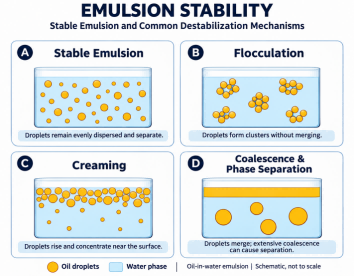
Coalescence occurs when droplets merge after their interfacial films fail. Flocculation forms clusters without necessarily merging droplets. Sedimentation moves droplets under gravity when density differences permit. Ostwald ripening can transfer material between droplets in systems with sufficient mutual solubility. Phase inversion changes which liquid forms the continuous phase. Several mechanisms may occur together, so effective troubleshooting begins with diagnosis.
2.7 Viscosity, Temperature, and Shelf Life
Higher continuous-phase viscosity can slow droplet migration, but excessive viscosity complicates pumping, mixing, and filling. Temperature can alter oil viscosity, emulsifier behavior, and the structure of waxes or fats. Conventional emulsions are generally thermodynamically unstable; manufacturers aim for useful kinetic stability over the required shelf life. Accelerated testing can reveal vulnerabilities but cannot automatically guarantee real-world storage performance.
3. Emulsifiers, Mechanical Energy, and Industrial Equipment
A suitable emulsifier helps stabilize interfaces, while mechanical energy usually creates the initial droplets. Industrial emulsification succeeds when both mechanisms work together. Mixing creates fresh interfacial area; emulsifier molecules must reach and protect that area before droplets merge again.
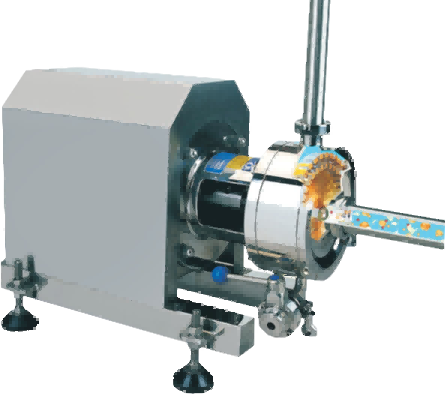
3.1 How Rotor-Stator High-Shear Mixing Works
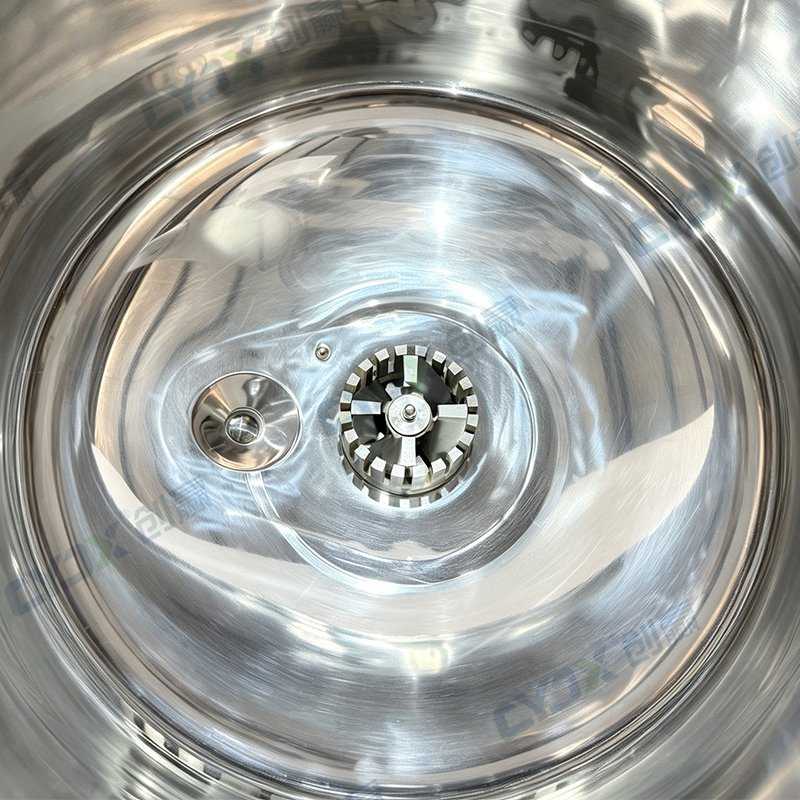
A rotor rotates within a stationary stator, drawing liquid into a region of intense local flow. Rapid acceleration, velocity gradients, and repeated circulation deform and break droplets. Mixer geometry, rotor diameter, tip speed, power input, circulation rate, viscosity, and processing time all affect the outcome. Two mixers running at identical rpm may deliver different results, so rpm alone is not a reliable performance specification.
3.2 Why Maximum Speed Is Not Always Best
Higher mixing intensity may reduce droplet size under suitable conditions. However, prolonged processing can generate heat, stress sensitive ingredients, change rheology, and waste energy. Mechanical input cannot compensate for an unsuitable emulsifier system. Instead, process engineers should identify a practical operating window that achieves the target droplet structure and product quality.
3.3 Batch and In-Line Emulsification
Batch high-shear mixers process material within a vessel and offer flexibility for ingredient addition, heating, and cooling. In-line mixers treat material as it passes through a dedicated chamber; manufacturers may integrate them into recirculation loops or continuous lines. In-line performance depends on flow rate, viscosity, pump suitability, and the number of passes. Neither arrangement is universally superior.
3.4 Where CreWin Equipment Fits
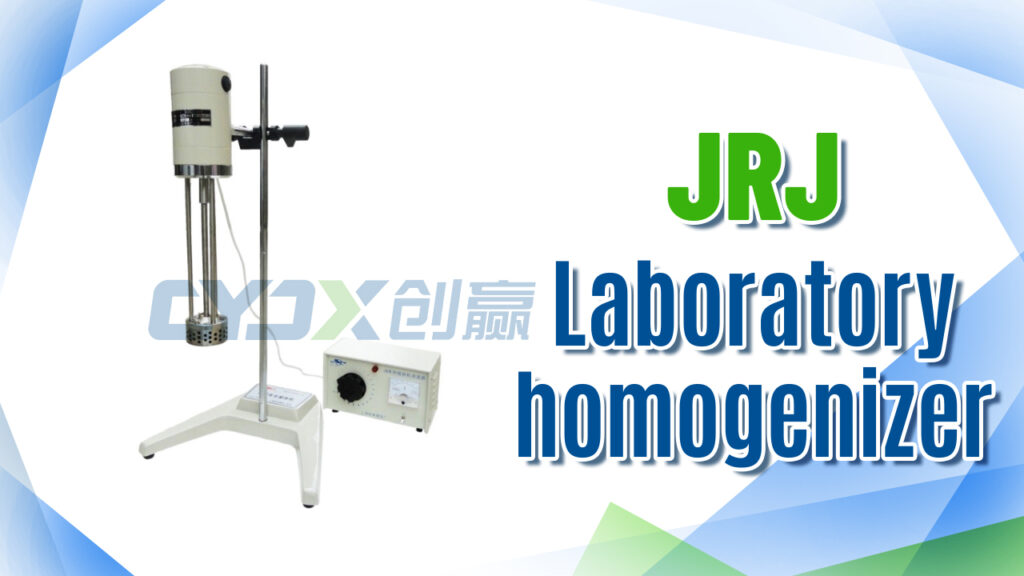
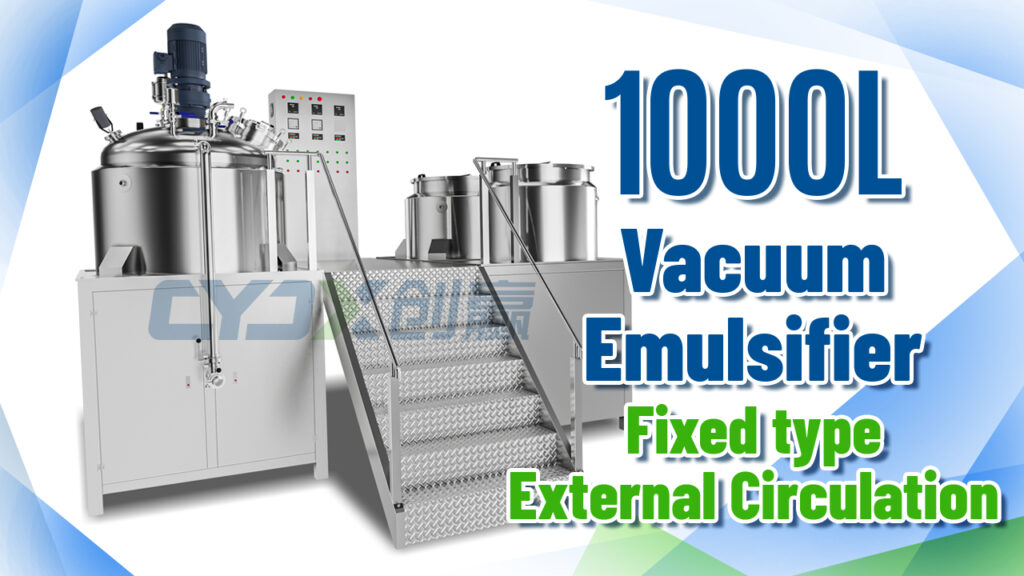
CreWin supplies vacuum emulsifying mixers, batch and in-line high-shear mixers, jacketed mixing tanks, and laboratory-scale systems. A vacuum emulsifying mixer can combine anchor agitation, homogenization, temperature control, and deaeration, depending on its configuration. Separate tanks can prepare oil and water phases, while laboratory units support formulation screening. The appropriate equipment choice depends on viscosity, working volume, heating and cooling needs, product sensitivity, and the intended manufacturing sequence.
3.5 Vacuum and Deaeration
High-speed agitation can introduce air, particularly when a surface vortex develops. Entrained bubbles may affect appearance, filling accuracy, and selected quality measurements. Vacuum-capable equipment can help remove air when formulation conditions allow. Nevertheless, excessive vacuum or inappropriate temperatures may increase foaming or remove volatile ingredients. Operators should validate the vacuum profile rather than assume stronger vacuum always improves quality.
4. Droplet Microstructure, Complex Emulsions, and Microfluidics
The internal droplet arrangement influences an emulsion's appearance, flow, stability, and ingredient release. Two visually similar creams can have very different microstructures. Microscopy, particle-size analysis, and rheological measurements help formulators examine those differences.
4.1 Understanding Droplet Populations
A W/O emulsion contains many water droplets within the oil medium. Droplet size, size distribution, concentration, and interactions shape the material's rheology. Densely packed droplets may create a structured product, while a more dilute dispersion may flow more readily. The final behavior also depends on interfacial properties and the continuous-phase composition.
4.2 Double Emulsions
Water-in-oil-in-water (W/O/W) emulsions contain small water droplets inside oil droplets, which themselves sit within an external water phase. Oil-in-water-in-oil (O/W/O) systems reverse that arrangement. Researchers explore these structures for encapsulation and controlled release, but their multiple interfaces create additional stability challenges. A conventional single-stage W/O process does not automatically produce a reliable double emulsion.
4.3 Microemulsions Are Not Simply Smaller Emulsions
Conventional emulsions are generally thermodynamically unstable, even when they remain kinetically stable for a useful period. Microemulsions can form thermodynamically stable structures within suitable composition and temperature ranges. Their behavior reflects distinct phase and surfactant conditions. Manufacturers should not confuse a fine conventional emulsion with a microemulsion solely because both contain small structures.
4.4 Microfluidic Emulsification
Microfluidic devices guide small liquid streams through carefully designed channels. Flow focusing and junction-based breakup can generate droplets under tightly controlled conditions. These methods provide useful insights into droplet formation and specialized applications. However, their throughput and process architecture differ from conventional industrial rotor-stator systems. They offer a scientific comparison, not a direct substitute for every factory-scale mixer.
4.5 Lessons for Factory Production
Microfluidic research reinforces a broader principle: consistent droplet generation requires consistent process conditions. Industrial manufacturers can apply that lesson by recording mixing settings, temperature histories, ingredient addition rates, and resulting droplet distributions. Measurements allow engineers to compare batches objectively rather than judge quality from appearance alone.
5. Food Emulsions: Stability, Manufacturing, and Equipment
Food processors use emulsification to control texture, spreadability, appearance, and storage behavior.In products such as butter and traditional margarine, the fat forms the outer matrix, surrounding numerous small droplets of water.By contrast, mayonnaise and milk generally have O/W structures. This distinction affects emulsifier choice, processing order, and equipment requirements.
5.1 Fat-Continuous Food Products
Butter combines dispersed water with a structured fat phase. Many margarines also rely on W/O arrangements, although product formulations vary. In these foods, fat crystallization contributes to texture and physical stability. A uniform droplet population alone cannot guarantee a desirable final product if the fat network develops incorrectly.
5.2 Ingredient Preparation and Addition Order
A conventional W/O process often establishes the oil phase before introducing water under controlled agitation. This sequence encourages water to disperse within the intended oil-continuous environment. However, specialized formulations may use alternative sequences or controlled phase inversion. Food manufacturers should validate the order and addition rate for each product rather than rely on a universal recipe.
5.3 Thermal Processing and Crystallization
Heating can melt fats and lower processing viscosity. Controlled cooling then shapes crystallization, texture, and consistency. Rapid or poorly controlled cooling may create undesirable structures, while insufficient temperature management can increase batch variability. Production engineers must coordinate mixing with thermal processing and, where necessary, specialized chilling equipment.
5.4 Food-Processing Equipment
Heated tanks prepare ingredients and control temperature. Rotor-stator mixers create dispersions; colloid mills and selected homogenizers provide alternative mechanical treatments. In-line emulsifiers can support recirculation or continuous operation. Certain fat-based products require scraped-surface heat exchangers and crystallization equipment beyond a conventional emulsifying mixer. Equipment selection must follow the food process, not the other way around.
5.5 Quality Control
Droplet-size analysis, microscopy, viscosity measurement, texture testing, and storage trials help characterize food emulsions. Temperature cycling may reveal physical vulnerabilities. Microbiological testing and hygienic processing address separate food-safety requirements. Physical stability does not establish microbiological safety, so manufacturers need appropriate controls for both.
6. Formulating and Manufacturing W/O Cosmetics
Cosmetic development combines interfacial science with sensory design and practical manufacturing. A W/O cream must maintain the desired phase structure while meeting requirements for texture, compatibility, storage stability, packaging, and intended use.
6.1 Define the Product Before Choosing Ingredients
A protective cold cream may prioritize richness and barrier properties. A water-resistant cosmetic may prioritize film behavior and durability. A premium moisturizer may require smooth spreadability with a less greasy finish. These targets influence oil selection, emulsifier chemistry, structuring agents, and processing conditions. The team should also define packaging and shelf-life expectations early.
6.2 Design the Oil Phase
Possible ingredients include vegetable triglycerides, mineral oils, esters, silicone fluids, waxes, and oil-phase structuring agents. Each contributes different sensory and processing properties. Formulators should examine oxidative stability, emulsifier compatibility, viscosity, and product feel rather than select an oil solely because of one desirable characteristic.
6.3 Design the Internal Water Phase
Purified water, humectants, electrolytes, and compatible water-soluble ingredients may form the internal phase. Glycerin can influence moisture-related performance, while salts may alter the behavior of particular emulsifier systems. Ingredient effects vary, so the development team should test combinations within the complete formulation.
6.4 Select and Screen W/O Emulsifiers
Selected polyglyceryl esters, sorbitan-based materials, and silicone-compatible surfactants may support particular W/O cosmetics. Supplier documentation provides starting recommendations, but laboratory trials must confirm compatibility and performance. A structured test matrix can vary emulsifier concentration, oil composition, or water content while holding other factors constant.
6.5 Step 1 — Prepare the Oil Phase
Charge the oil-compatible ingredients into a suitable vessel. Begin controlled agitation and heat when the formulation requires melting waxes or other solids. Ensure uniformity before introducing the next phase. Avoid unnecessary air incorporation and record the temperature profile.
6.6 Step 2 — Prepare the Water Phase
In a separate tank, combine purified water with compatible water-soluble ingredients. Mix until the phase reaches the required condition. Apply heating only as the formulation requires, and monitor temperatures because phase differences can change viscosity and emulsifier behavior.
6.7 Step 3 — Establish the Continuous Phase
Prepare the oil phase and incorporate the emulsifier according to the validated procedure and supplier guidance. Some emulsifier systems require pre-dispersion or particular thermal conditions. Uniform preparation helps create reproducible conditions for water addition.
6.8 Step 4 — Add Water at a Controlled Rate
During this stage, the mixing system should maintain steady agitation as the operator gradually feeds the aqueous ingredients into the oil-based mixture. The correct rate depends on viscosity, emulsifier behavior, equipment geometry, and batch size. Excessively rapid addition can overwhelm the dispersion process in some systems, but extremely slow addition may simply extend production time. Trials should determine the operating window.
6.9 Step 5 — Apply High-Shear Emulsification
Activate the homogenizer under validated conditions. Local hydrodynamic forces promote droplet breakup while the emulsifier stabilizes newly formed interfaces. Monitor time, temperature, product circulation, and rheological changes rather than rpm alone. Stop or reduce high shear when the process reaches the desired structure.
6.10 Step 6 — Cool and Build Final Texture
Adjust cooling and agitation according to the formula. Jacketed vessels help remove heat, while gentle circulation can maintain uniformity. Waxes and other structuring ingredients may change the texture as temperature falls. Add heat-sensitive ingredients at appropriate stages based on their compatibility requirements.
6.11 Step 7 — Control Entrained Air
Check the product for unwanted bubbles. Improve vessel fill level, mixer placement, and surface-flow behavior where necessary. A vacuum-capable system may help deaerate compatible formulations, but the operator must control foaming and volatile losses.
6.12 Step 8 — Test and Transfer
Evaluate appearance, viscosity, droplet structure, emulsion type, and relevant stability indicators. Confirm the batch meets its release criteria before filling. Appropriate pumps and transfer conditions help reduce unnecessary stress on the finished product.
7. Troubleshooting Common W/O Production Problems
7.1 Separation After Production
Review emulsifier compatibility, droplet-size distribution, thermal history, and storage conditions. Determine whether the main mechanism involves coalescence, sedimentation, or phase inversion. Additional mixing may not repair an emulsion that has undergone irreversible structural change.
7.2 Excessively Greasy Texture
Examine the oil blend, structuring agents, and overall phase design. A W/O system exposes the skin to the continuous oil phase, but careful emollient selection can modify sensory properties. Consider whether the intended product truly requires a W/O structure.
7.3 Inconsistent Viscosity
Variations in ingredient lots, temperature profiles, crystallization, and droplet distribution may change viscosity. Standardize measurement temperature and processing records. Compare microscopic structure when conventional viscosity measurements do not explain the differences.
7.4 Phase Inversion During Processing
Confirm the actual emulsion type using conductivity, dilution, or dye tests. Revisit the oil-water ratio, emulsifier system, addition order, and temperature history. Higher homogenizer speed alone will not necessarily prevent inversion.
7.5 Persistent Air Bubbles
Reduce surface turbulence, review mixer position and fill level, and consider controlled deaeration. Vacuum processing may help, but excessive vacuum can introduce new problems with volatile or foam-prone ingredients.
7.6 Laboratory and Factory Results Differ
Larger vessels change circulation patterns, heat transfer, and exposure to the high-shear zone. Compare tip speed, power input, mixer geometry, processing time, and temperature history rather than duplicate laboratory rpm. Pilot trials can reduce commercial scale-up risk.
8. Scaling Up and Selecting Emulsifying Equipment
Commercial scale-up requires reproducible product characteristics, not merely a larger ingredient list. Engineers should define target droplet structure, viscosity, emulsion type, and stability criteria before specifying equipment. Batch volume, working viscosity, circulation, power input, thermal control, and cleaning requirements then guide machine selection.
Laboratory equipment helps screen ingredients and establish preliminary processing conditions. Pilot equipment tests larger-batch behavior. Commercial systems implement validated operating procedures and monitor critical quality attributes. Using comparable analytical methods across these stages makes scale-up decisions more reliable.
A vacuum emulsifying mixer may suit cream production that requires integrated heating, cooling, anchor mixing, homogenization, and deaeration. A batch high-shear mixer may suit flexible processing in existing vessels, while an in-line unit may suit recirculation or continuous workflows. Jacketed tanks can prepare separate phases. CreWin can help customers compare these configurations against their formulation and production objectives; no equipment choice substitutes for formulation validation.
9. Frequently Asked Questions
What is a water-in-oil emulsion?
A W/O emulsion contains water droplets throughout a continuous oil phase. A suitable emulsifier and controlled processing conditions help maintain the structure.
What are common W/O examples?
Butter, many conventional margarines, selected cold creams, and some water-resistant cosmetic products can use W/O structures. Actual phase identification depends on the formula.
How does W/O differ from O/W?
W/O contains dispersed water in continuous oil; O/W contains dispersed oil in continuous water. The difference influences dilution, conductivity, processing, and many sensory properties.
Which emulsifier is best for W/O?
No single emulsifier works best for every formula. Oil composition, internal water content, salts, temperature, and performance targets determine the appropriate system.
Can a high-shear mixer create W/O emulsions?
Yes. High-shear equipment can help break water into droplets within an oil-continuous phase, provided the emulsifier system and processing sequence support that structure.
Does smaller droplet size always mean better stability?
No. Smaller droplets can reduce certain separation tendencies, but interfacial protection, viscosity, and formulation compatibility remain essential.
What causes W/O emulsions to separate?
Coalescence, sedimentation, unsuitable emulsifier selection, temperature changes, ingredient incompatibility, and phase inversion can all contribute
What is phase inversion?
Phase inversion changes which liquid forms the continuous phase. Composition, emulsifier behavior, and processing conditions can trigger this transition.
Is vacuum essential for every W/O product?
No. Vacuum may help manage entrained air in appropriate formulations, but many emulsions can be manufactured without it.
How can factories improve consistency?
Standardize ingredients, phase preparation, addition order, temperature, mixing conditions, analytical methods, and batch records. Compare measurable product attributes across production runs.
Conclusion
Water-in-oil emulsions support a wide range of cosmetic, food, and specialized industrial applications. Their performance depends on the combined effects of formulation chemistry, interfacial stabilization, droplet microstructure, and manufacturing conditions. Emulsifier selection establishes the basis for a suitable interface; mechanical processing creates the dispersion; and thermal control, testing, and quality systems help preserve product performance.
Advanced research into microstructure and microfluidics continues to deepen our understanding of droplet formation. Meanwhile, manufacturers can apply the same core principles through validated mixing methods and appropriate industrial equipment.
CreWin supplies vacuum emulsifying mixers, high-shear homogenizers, laboratory systems, and mixing tanks for diverse production requirements. Matching the machine configuration to the product's viscosity, batch size, temperature needs, and quality targets helps manufacturers develop a more consistent process. Successful emulsification starts with the right formula and continues with the right manufacturing conditions.

 ZS Lab Vacuum Emulsifying Mixer
 ZEx Ex-Proof Vacuum Homogenizer Mixer without Hydraulics
 ZA Lab Vacuum Homogenizer
 ZB Vacuum Homogenizer Emulsifier without Hydaulics
 ZB Simplified Vacuum Homogenizer Mixer
 ZA Vacuum Homogenizer Mixer without Hydraulics
 ZS Vacuum Emulsifying Mixer
 ZB Vacuum Homogenizer Emulsifier